


Latest
Story
24 October 2026
UN Family in Zimbabwe Walks for the Charter, Steps Up Against Cancer on UN Day
Learn more
Speech
23 October 2026
Keynote Address by Rosemary Kalapurakal, UN Resident Coordinator in Zimbabwe: From Development Priorities to Investment and Action
Learn more
Story
22 October 2026
Beyond a Seat at the Table, Women Shaping Zimbabwe’s Economic Future
Learn more
Latest
The Sustainable Development Goals in Zimbabwe
Zimbabwe is steadily advancing towards its vision of becoming an upper-middle-income society by 2030, guided by national strategies that are closely aligned with global and regional development agendas. The United Nations has walked this path alongside the country, supporting national priorities through coordinated, joined-up programmes that address food security, education, energy, jobs, digital connectivity and climate resilience. By localizing the SDGs across provinces and districts and strengthening national coordination and data systems, the partnership has turned ambition into tangible results for communities. Gains in health, food security and economic recovery signal that progress is real and momentum is building. With a continued focus on inclusion, innovation and leaving no one behind, the next phase of cooperation promises to deepen resilience, unlock opportunities for young people, and build a more prosperous and sustainable future for all Zimbabweans. The UN remains a committed partner in this journey — working together to translate stability into lasting transformation and hope into shared prosperity.
Story
10 March 2026
Under Cloudy Bulawayo Sky, a Hospital Steps into the Light
On an ordinary weekday morning, the courtyard at Mater Dei Hospital was anything but ordinary. Nurses in crisp uniforms, local community leaders, government officials, UN representatives, and Officials from the Old Mutual Group gathered under a cloudy and cool Bulawayo weather to mark a quiet revolution, the switch-on of a solar photovoltaic (PV) hybrid system that promises to keep the hospital’s lights – and life‑saving machines – on.For the doctors, nurses and patients who call this faith-based institution a lifeline, the new system is not about technology or engineering diagrams. It is about one simple thing, certainty. Certainty that an operation will not be halted mid-surgery. Certainty that a premature baby’s incubator will not suddenly go dark. Certainty that vaccines in the cold room will still be potent when they are needed.Honorable Yeukai Simbanegavi, Deputy Minister of Energy and Power Development, commenced the proceedings with pride. "Today, we witness the tangible results of our Renewable Energy Fund, validating that our collaborative efforts indeed bear fruit," she said. Highlighting the importance of energy access, she said, "Reliable power is a foundation of modern economies and crucial for improving quality of life in our communities." Appreciating the strong partnership with the UN and Old Mutual Group, Honourable Simbanegavi advocated for increased innovation and collaboration, "as we accelerate energy expansion, it is through shared commitment that we can achieve universal electricity access by 2030." Noting how electricity has quietly become as essential as medicine and trained staff in the modern hospital setting, the Honourable Deputy Minister said, “access to reliable, affordable, and sustainable energy remains a critical enabler for quality healthcare delivery in Zimbabwe.”For Mater Dei, which serves communities across Bulawayo, Matabeleland North and beyond, this has long been a daily struggle. Like many mission and referral hospitals across the country, it has had to weather frequent power cuts, relying on noisy, costly diesel generators to keep critical wards running.“Health institutions, particularly mission and rural referral hospitals, continue to experience electricity supply interruptions that compromise essential medical services, cold-chain systems, surgical operations, and emergency response capacity,” said the UN Resident and Humanitarian Coordinator Mr. Edward Kallon. The UN Chief emphasized the broader significance of the project, "We are switching on possibilities for patients whose lives depend on uninterrupted power. This is not just about solar panels; it represents progress toward a resilient health system."He painted a stark picture of Zimbabwe's energy reality, "With only 41 percent of the population having access to electricity, it is vital we bridge this gap." Mr. Kallon called for intensifying partnerships, saying, "Progress will be unequal and unjust without focusing on those left furthest behind."When the Power Goes, Lives Hang in the BalanceAsk any nurse in the theatre wing what a sudden blackout feels like, and you will hear about the seconds that seem to stretch into hours.In the past, when ZESA power failed during surgery, staff had to scramble, relying on generators that sometimes took precious minutes to kick in or required fuel that was not always immediately at hand. Doctors recall stitching by the dim glow of backup lamps. In the maternity ward, midwives have watched monitors flicker off just as a baby’s heartbeat needed close watching.Those moments are not just inconvenient; they are terrifying. Against this backdrop, Mater Dei was “identified as a priority facility requiring resilient and sustainable energy infrastructure,” Mr. Kallon explained, outlining how the hospital was selected under the Zimbabwe Joint SDG Fund Programme as one of the flagship sites to show what decentralized renewable energy can do for social services.With support from the joint UN SDG Fund's catalytic fund, the Old Mutual Group is managing and spearheading the Renewable Energy Fund, which has invested in the installation of a solar PV hybrid system designed to provide continuous power for essential hospital operations. This system integrates rooftop solar panels, smart inverters, and battery storage alongside the grid and existing backup systems.A System Built Around Patients, Not Just PanelsMr. Samuel Matsekete, CEO of Old Mutual Group, elaborated on the project’s impact, "This solar power plant not only enhances our energy infrastructure but also supports the Sustainable Development Goals we strive to achieve." He described the solar installation's capacity: "With a generation of over 1.3 million kilowatt-hours annually, we ensure reliable power for critical health services."Mr. Matsekete celebrated blended financing and public-private partnerships, "This incredible project was made possible through collaboration, demonstrating how united efforts can tackle energy challenges head-on."The new installation is designed to keep power steady where it matters most, in operating theatres, intensive care units, maternity and neonatal wards, emergency rooms, and cold rooms that store blood, vaccines, and vital drugs.“Under the Zimbabwe Joint SDG Fund Programme – strategic investments and matched fund from the Old Mutual Group are being deployed to demonstrate how decentralized renewable energy solutions can strengthen social service delivery while advancing sustainable development outcomes,” Mr. Kallon said, positioning Mater Dei as a demonstration site for the country.In practical terms, this means fewer cancelled operations, shorter delays in emergency response, and better continuity of care for chronically ill patients. It means that staff can plan surgeries based on clinical need, not on the vagaries of the power schedule. It means mothers in labour and children in high-dependency care will no longer be at the mercy of an unexpected outage.For rural families who travel long distances to reach the hospital, the new stability can be the difference between returning home treated and returning home in grief.Cutting Costs, Cutting Emissions – and Quietly Changing LivesBeyond clinical safety, the solar system is also an economic and environmental intervention. Diesel has long been a financial burden on health facilities, siphoning funds away from medicines, staff training and maintenance.Dr. Macheka, Chairperson of Mater Dei Hospital, acknowledged the hospital's crucial role in the community, stating, “Our ability to deliver top-tier care hinges on reliable power. This solar project answers our long-standing energy reliability challenges. Dr. Macheka explained the significance of the solar system, "For patients, it means uninterrupted access to life-saving equipment; for our dedicated staff, it offers a dignified work environment." He noted, "We are paving the way for a model that can be replicated nationwide."“The renewable energy installation enhances operational continuity, reduces dependence on diesel generation, lowers operational costs, and contributes to Zimbabwe’s commitments under SDG 3 (Good Health and Well-being), SDG 7 (Affordable and Clean Energy), and SDG 13 (Climate Action),” said Dr Macheka.Lower fuel bills translate into more resources for patient care. Savings can support the purchase of essential drugs, repair of equipment, or outreach services to remote communities. At the same time, reduced diesel use means less air and noise pollution around the hospital and a smaller carbon footprint – a local gain that feeds into a global climate effort.For staff, the human impact is immediate. Fewer nights are punctuated by the roar of generators. The wards are quieter, cleaner, and more conducive to healing. The hospital’s maintenance team can focus more on preventive upkeep of medical equipment rather than constant firefighting to keep old generators running.A Beacon for Faith-Based and Rural Health FacilitiesMater Dei is not alone in its struggles, nor in its hopes. In many parts of Zimbabwe, mission and church-run hospitals bear a disproportionate share of the burden of caring for the rural poor. These institutions often serve as the only accessible point of tertiary and secondary care for entire districts, yet they operate with fragile infrastructure and limited budgets.What happens at Mater Dei, therefore, resonates far beyond Bulawayo. The hospital’s transformation into a solar-powered facility sends a signal to similar institutions across the country - modern, climate-resilient healthcare is possible, even in resource-constrained settings.“The commissioning ceremony marks the successful completion of this flagship intervention and provides an opportunity to showcase integrated UN support towards climate-resilient health infrastructure and sustainable energy access,” the UN Resident and Humanitarian Coordinator said, highlighting the broader vision behind the project.That “integrated support” includes not only the hardware on the roof but also training for local technicians, capacity-building for hospital management, and linkages to national energy and health policies, ensuring that Mater Dei’s new system is sustainable in the long term.A Community’s Hospital, a Country’s LessonDeputy Honouable Minister and dignitaries unveiled the commemorative plaque, and the system was officially commissioned. But the most meaningful reactions were quieter, a theatre nurse whispering that she would finally “sleep better on call”; a young mother in the maternity ward, relieved to hear that the incubators in the neonatal unit would no longer be vulnerable to outages; a technician who spoke proudly about maintaining a state-of-the-art system in the hospital.While photovoltaic panels and batteries occupy the technical spotlight, the story at Mater Dei is ultimately about people – patients whose outcomes will improve, health workers whose stress levels will lessen, and a community whose confidence in its hospital will deepen.By anchoring advanced technology in the daily realities of a faith-based hospital, the project shows how clean energy can be more than a climate solution; it can be a human solution. In a country where energy insecurity has too often translated into health insecurity, the quiet hum of solar power at Mater Dei Hospital represents something profoundly social, the right to care that does not switch off when the grid does.Welcoming guests to the Mater Dei Solar Commissioning, Mr. B. Nkomo, Old Mutual Group Board Member, said, "today marks a crucial milestone for both Mater Dei Hospital and the Old Mutual Renewable Energy Fund." He reinforced the project's role in ensuring continuity of healthcare services, adding, "Hospitals rely heavily on consistent power, and this investment secures that necessity."The official commissioning of the Mater Dei Hospital Solar Power Plant serves as a beacon of hope for energy resilience in Zimbabwe. Leaders from various sectors rallied, echoing the commitment to transform the nation’s energy landscape, ensuring that no community is left behind in the journey toward a sustainable future.As the sun set over Bulawayo on commissioning day, the hospital’s lights stayed on – powered not by the rumble of diesel, but by the fading rays stored on its rooftop. For the communities of Bulawayo and Matabeleland North and the staff who serve them, that steady glow was more than illumination. It was a promise.
1 of 5

Story
08 April 2026
Buried at 14, She Survived to Warn the World
On a Saturday in May 1994, fourteen-year-old Frida Umuhoza lay face down in a shallow ditch in rural Rwanda, her cheek pressed into the soil, her legs trapped beneath the weight of her relatives’ bodies. Around her, neighbors she once greeted daily had finished their work and were moving on.Before the blows began, she had been offered a choice of how she wanted to die.“It could be a machete, a club, a knife, a spear, or a big tree with nails,” she recalls. “But there was no gun, and even if there was, we couldn’t afford it anyways.” She chose the club.That moment—one girl in a ditch, surrounded by a community turned against itself—turned “genocide” from an abstract word into a series of sounds and images that never leave, children screaming, “Please forgive me. I will never be a Tutsi again.” A mother’s head hacked from her body. A beloved grandfather, Bible in hand, asking, “Why are you doing this to us?” before a club silenced him.Thirty-two years later, in Harare, Zimbabwe, on Tuesday 7 April, Frida’s story was shown as a video testimony—one among thousands—at the heart of a global commitment that the Genocide against the Tutsi in Rwanda will be remembered truthfully, taught honestly, and never allowed to be denied or repeated.“We gather today, here in Harare, united in sorrow and in resolve,” said Mr. Edward Kallon, the United Nations Resident and Humanitarian Coordinator, at the 32nd Commemoration of the 1994 Genocide against the Tutsi. “More than a million people were murdered… Entire families were erased. Communities that had lived side by side for generations were torn apart by a brutality that still defies understanding.” Frida’s was one of those families.“Stand up. You are Tutsi.”From the outside, her childhood looked ordinary, a businessman father, a mother raising six children—three sons and three daughters—in a home shaped by faith and hard work.“I had no idea I was a Tutsi until I started school at the age of six,” Frida says.One day, a teacher entered with a registration book and asked how many Hutus and how many Tutsis were in the classroom. Frida didn’t know where she belonged. A friend leaned over and whispered the words that would define her life: “Stand up. You are Tutsi.”“Since then,” she says, “I knew that I was referred to as a cockroach and a snake—less than a human being.”At the Harare commemoration, Mr. Kallon described how this dehumanization was weaponized. A radio journalist “allowed his microphone to become a weapon,” he said, using “inyenzi”—cockroaches—to make murder “thinkable, then acceptable, then routine.”For Frida, the violence did not begin with machetes. It began with language—in a classroom, and later on the airwaves.In 1990, the private radio station RTLM began broadcasting hate speech. “It was purposely there to plant and put hate speech on the radio,” she remembers. Lists followed. “Our friends also told us, from school, that we were on the list of the people that are supposed to die.”Killings had already started in parts of the country. Her father was arrested, accused of supporting the Rwandan Patriotic Front. His business was crippled by restrictions. Fear settled into the family’s daily life.When President Juvénal Habyarimana’s plane was shot down in April 1994, Frida says, the radio announced the killing should begin. “We already knew that machetes had been supplied in all the villages.”“You were killed by a friend, a neighbor.”In her region, the massacres began later—around the third week of April. Frida’s mother split the family into small groups to hide. Frida, her sister and a cousin were sent to a neighbor’s house; others fled into the bushes.“We’d been running for weeks and weeks,” she says.Then, in May, the killers changed tactics. An announcement went out, the killing had stopped; people could return home. It was a lie. “We went back home, but there was no home to go back to,” Frida says. “My home was demolished.”They made their way to her grandfather’s house. He was a respected teacher, “a really wonderful man in the community.” He was still alive, but only because his captors had decided to let him die slowly—without food or water—after they killed everyone else.For a brief moment, hope returned. Frida’s mother arrived with her brothers and two boys she had been sheltering. Her father, recently released, returned that same week. “I was very happy to see my whole family still alive,” Frida says.It didn’t last.They were rounded up and taken to a roadblock with other Tutsi families. In Frida’s area, even death had a price. “To be shot was an expensive death, you had to pay for it,” she says. They couldn’t. Asked for a grenade, her grandfather explained they had no money. They were sent home with the message understood: cheaper methods would do.On the day of the president’s burial, the killers came.Early that morning, Frida heard children screaming at neighbors: “Please forgive me. I will never be a Tutsi again.” “Very little children,” she says, “who believed that the worst crime they had ever committed was being a Tutsi.” Then it was their turn.The ditchEighteen people were in her grandfather’s house: grandparents, aunts, siblings, cousins, her mother. One younger sister had been killed earlier. Her father, certain he would be targeted first, had hidden for weeks on the roof, listening.They were driven to a prepared ditch. “When we got there, it was all our friends and our neighbors,” Frida says. “You weren’t killed by people from so far away. You were killed by a friend, a neighbor, someone that you’ve loved.”Frida had already decided how she would die. She asked a young man she knew—John—who held a club, to kill her with it.As the blows fell, she saw her mother’s head chopped off near her brothers. “When I saw that, I covered my head with a hoodie,” she says. Then the club hit the back of her head. She lost consciousness.When she woke, she was beneath a pile of bodies. The killers were already filling the ditch. “Everybody had died,” she says. Her sister beside her was still alive—briefly—then took her last breath.She was fourteen, bleeding, pinned under roughly fifteen corpses, and buried.“At the age of 14, you really don’t understand everything,” she says. “But I then started thinking, maybe my dad will come down and dig me out.”She didn’t know that from the roof her father had watched the murder of his wife, children and extended family—then climbed down and offered himself to be killed. As Frida screamed under the soil, the killers celebrated his death. “I lost hope,” she says.A neighbor heard her. A woman nearby caught the sound of her crying and fetched help. “The young man who dug me out was a young man who had worked for my grandfather,” Frida says. Later, a Hutu man hid her until RPF forces reached the village and the slaughter ended.“I was a broken girl,” she says. “I was traumatized for a very long time… deep inside, I was lost.”“It is as if it happened yesterday”In Harare, officials returned again and again to the fact that time does not dissolve this pain. Rwanda’s Ambassador to Zimbabwe, His Excellency James Musoni, who is also the Dean of Diplomatic Corps said the trauma remains vivid and survivors continue to bear physical and emotional scars.Frida put it more starkly, survivors are still suffering—depression, anxiety, nightmares. Women raped and infected with HIV/AIDS still need help. “It is not enough to remember the dead; we must protect the living,” Mr. Kallon said, echoing the UN Secretary-General. Prevention means rejecting incitement, investing in social cohesion, and strengthening institutions that stop mass atrocities.Zimbabwe’s government, in a keynote address delivered by Chief Director Mr. M Chigiji on behalf of Ministry of Foreign Affairs and International Trade Minister Honorable Professor Amon Murwira, tied the commemoration to constitutional obligations to promote regional and international solidarity and to participate in organizations that stand for humanity’s well-being. The message emphasized Rwanda’s resilience and the difficult work of reconciliation as proof of what determined rebuilding can achieve.Naming the crime—and confronting denialMr. Kallon noted that in 2018 the UN General Assembly amended its language to explicitly recognize the Genocide against the Tutsi in Rwanda, closing space for denial, distortion, and equivocation. “This clarity matters,” he said. “Naming the crime accurately is the first defense against its repetition.”Ambassador Musoni warned that denial and “genocide ideology” now spread rapidly through digital platforms, and called for decisive measures - confronting hate speech, ensuring perpetrators are brought to justice, and refusing to allow those responsible for grave crimes to live freely while spreading division.Frida’s appeal is simpler—and harder. “We all have that responsibility of fighting against that ideology,” she insists. “It’s not easy when you’ve lost everything you’ve loved and known.”Genocide as a chain of choicesMr. Kallon called it organized and planned—driven by political leaders who chose division, commanders who turned institutions into instruments of slaughter, administrators who used lists and identity papers as tools of death, media voices that poisoned the public sphere, and leaders who stayed silent when their moral authority was needed most.But even in Frida’s story, the same society that produced killers also produced rescuers: the woman who heard her under the soil, the young man who dug her out, the man who hid her until liberation. “Genocide is not inevitable,” Mr. Kallon said. “It is built, step by step. And it can be prevented, step by step.”Prevention begins long before the first machete is raised - challenging dehumanizing jokes, resisting scapegoating, defending inclusive institutions and independent courts, upholding rights, and acting early when hate speech and targeted violence rise.From the podium, Mr. Kallon assigned responsibility widely. “First, to governments and political leaders,” Mr. Kallon said, “you carry the primary responsibility… to protect your populations from genocide, war crimes, ethnic cleansing and crimes against humanity.” That means inclusive institutions, security forces that protect rather than prey on citizens, independent courts, open civic space and honest addressing of historical grievances.To security institutions, he was blunt: “‘Following orders’ is no defense for participation in genocide or crimes against humanity.” Early warning requires monitoring hate speech, militias and targeted violence—and acting on them.To educators and cultural leaders, “Genocide begins in the mind before it is carried out by the hand. You shape how young people understand ‘us’ and ‘them.’ You decide whether history is told honestly… or manipulated to sow new hatred.”To media professionals, “Today, digital platforms can spread dehumanizing language and incitement faster and further than ever before.” Societies, he argued, need “responsible journalism, ethical communication, and media literacy” that can distinguish hate speech from legitimate debate.Religious and traditional leaders, Mr. Kallon noted, carry “enormous weight” in tense moments, and young people “are not only the ‘leaders of tomorrow;’ you are shapers of today’s social media spaces, community initiatives, and civic movements.”But his final appeal was to everyone.“Genocide does not begin with mass killings,” he said. “It begins with whispered slurs, with jokes that demean, with rumors that paint neighbors as enemies. Every time we refuse to laugh at a dehumanizing joke; every time we defend someone who is targeted because they are different… every time we speak out against corruption, discrimination and abuse – we are acting as agents of prevention.”Remember, unite, renewThe commemoration theme—“Remember, Unite, Renew”—ran through the ceremony and through Frida’s life. Rwanda’s post-genocide progress, speakers said, shows what a country can build after near-total destruction. As the ceremony closed, Mr. Kallon offered a final standard - remember faithfully and without distortion, listen to survivors as a moral compass, and act—in institutions and in everyday life. “‘Never again’ must be more than a slogan,” he said. “It must be the standard by which we measure our laws, our leaders, and ourselves.”For Frida, that standard began with a teacher’s roll call and a radio’s lies, and ended in a ditch filled with bodies. Her survival—and her decision to speak—insists on a final question, from Harare to Kigali and beyond: will the world truly hear, and act, step by step, before the next ditch is dug?
1 of 5

Story
04 March 2026
Farmers Demand a Fair Deal in Digital Agriculture
At dawn in Binga, in Zimbabwe’s drought-scorched Matabeleland North due to El Nino, 46-year-old farmer Sibongile Ncube peers at her simple Nokia handset, scrolling through a stream of SMS messages she no longer knows how to read—or trust.One text from a seed company promotes a “climate-smart” maize hybrid she’s never heard of. Another, in English, warns of “severe rainfall variability,” using language that feels far removed from the dry fields and empty micro-dam outside her homestead. A third insists she register yet again for a new subsidy scheme if she wants cheaper fertilizer.“They are always asking us for information,” she says quietly. “My name, my field size, my yields. But most of the time, nothing comes back. We don’t know who is using that information. We don’t know how it helps us.”That uneasy gap—between data taken and value returned, between cautious hope and deep distrust—sat at the core of the 2026 Agile Data and Digital Public Infrastructure Summit held this week at the Elephant Hills Hotel in Victoria Falls.Against the backdrop of the roaring falls and the soft clatter of laptops, one theme cut through: if Zimbabwe is to build a climate-resilient, digitally enabled agriculture sector, it must start with farmers like Sibongile—not as raw material for data pipelines, but as decision-makers who benefit directly from the systems built around them.“No farmer, no future. No trust, no transformation.” “We must be honest with ourselves,” said Mrs. Miranda Tabifor, UNFPA Representative, Chair of the UN Programme Management Team, and Co-Chair of the National Data for Development and Innovation in Zimbabwe, as she opened a key session on policy for agile data and digital public infrastructure.“The question before us is not whether data and digital tools will shape the future of Zimbabwean agriculture and climate resilience. They already are. The question is whether we will shape that future deliberately and inclusively—or allow it to evolve in fragmented, inequitable, and ultimately fragile ways.”Addressing government officials, private-sector leaders, researchers, development partners and small-holder farmers from different parts of the world, Mrs. Tabifor offered an honest assessment. “Across the continent, and here in Zimbabwe, we have seen substantial investments in digital agriculture platforms—weather apps, farmer registries, e‑voucher systems, remote-sensing dashboards,” she noted. “Yet many initiatives remain small, fragmented, and difficult to scale. The barrier is no longer just technology. It is trust.”Farmers in the room recognized the pattern immediately, repeated registrations by different agencies; long questionnaires; promises that the data is “for development”—followed by silence.“Too often,” Mrs. Tabifor continued, “government builds one platform, the private sector builds another, donors fund a third, and none of them talk to each other. Data is locked in silos, business models feel threatened, and farmers see duplication rather than value. What emerges is not an ‘architecture of trust,’ but an architecture of distrust.”For farmers, that architecture is painfully tangible. It appears when an extension officer collects data and never returns with advice. It appears when a woman farmer provides detailed harvest figures, only to discover that her non-farming husband is the one approached about a loan.“In many places, including here in Zimbabwe,” Mrs. Tabifor warned, “the experience is one sided: farmers give data, and receive little in return. When this happens, even the best-designed systems will fail the very people they are meant to serve. Good systems will fail good farmers.”Her response is a fundamental shift she calls “Data Democracy”—a rebalancing of who holds power, and who reaps value, in the data ecosystem. “Data Democracy means that the farmer is not merely a ‘data point’ or a ‘source;’ she is a data beneficiary,” Mrs. Tabifor stressed. “Every interaction in which her data is collected should yield immediate agronomic value, market value, or risk management value.”“In other words,” she said, “we must ensure a clear pathway from Data to Knowledge (D2K) for farmers themselves. If a farmer reports her yields or input use, that data should come back to her as something she can understand and apply within her context.In Binga, that D2K pathway is exactly what Sibongile feels has been missing. “They asked me last year, ‘How many cattle do you have? How many bags did you harvest?’” she recalls. “I answered everything. But when I asked how this would help me, they just said, ‘It will help the government and donors to plan.’ That is good—but what about helping me to plan?”For Mrs. Tabifor, simply adding more data and more messages is not the answer. “There is also a danger we must avoid: ‘infobesity,’” she cautioned. “More messages, more dashboards, and more alerts do not automatically translate into better decisions. Overwhelming farmers—and indeed policymakers—with non-actionable information can paralyze decision-making, rather than improve it.”For Sibongile, whose first language is Ndebele and who shares one basic phone with her husband, these design choices are decisive. If information arrives in a language she doesn’t speak, on a device she doesn’t own, in a format she doesn’t grasp, “it might as well not exist,” she says.Mrs. Tabifor highlighted that the digital transition is not neutral: it risks deepening existing inequalities. “We know that women in Zimbabwe, as in many countries, have less access to mobile internet, smartphones, and digital skills,” she emphasized. “If we design data systems that assume universal connectivity or literacy, we unintentionally deepen inequality.”She posed a direct challenge to policymakers: “Do our existing and planned data systems ensure that farmers retain meaningful control over their data—and derive direct value from what they share? What specific measures are we adopting to close the digital gender gap—so that women and other smallholder farmers are equal participants and beneficiaries of data-driven services?”. Practical ideas are already being discussed:Subsidized rural connectivity to cut the cost barrier for low-income households.Targeted support for women’s digital literacy and farmer field schools enhanced with digital tools.Services designed for basic phones—through USSD, SMS, and voice—in local languages.Requirements that public–private partnerships report gender-disaggregated reach and impact.For Sibongile and her neighbors, such changes could be decisive. “If information comes by WhatsApp, we are already out,” she says. “But if it is voice, in isiNdebele, then even my grandmother can benefit.”“Zimbabwe can reimagine the role of the state—not as the exclusive builder of platforms, but as the designer and guarantor of Digital Public Infrastructure- the neutral ‘rails’ upon which many actors can innovate,” Mrs. Tabifor argued. She framed two central policy questions for Zimbabwean and other leaders who participated at the Summit:Are current digital agriculture strategies building yet more siloed apps, or are they purposefully constructing shared, pre‑competitive rails?Within those strategies, have we clearly defined an “architecture of trust”—who is liable, who audits, and who enforces?“Without answers to these questions,” she warned, “any AI-based advisory system, e‑voucher platform, or climate data hub will operate on unstable ground. But with clear, enforceable rules of the game, Zimbabwe can unlock not just pilots, but system-wide transformation.”Mrs. Tabifor’s third major shift spoke directly to the lived experience of climate volatility on Zimbabwean farms: moving from slow, retrospective monitoring to agile data that enables rapid, climate-adaptive policymaking.“Traditional monitoring and evaluation approaches—large baseline surveys, midterm reviews, and endline assessments—are important,” she acknowledged. “But they are often too slow and too expensive to guide real-time decision-making. By the time we learn that a fertilizer subsidy didn’t reach the right farmers, or that a conservation practice isn’t being adopted, the season is over. We are learning after the fact.”“For Zimbabwe, which faces recurrent droughts, cyclone risks, and shifting rainfall patterns,” Mrs. Tabifor said, “the ability to adapt policies within a season through connectivity and digital rails moving “from Compute to Capability” for AI-driven agricultural advice could be transformative.” “AI will not create value in isolation,” she said. “It needs reliable connectivity, interoperable data systems, ethical safeguards, and human capacity.”Mrs. Tabifor anchored these proposals within a broad human-rights and sustainable development vision. “Zimbabwe’s DPI ecosystem can be designed as an open, interoperable and human-centric system that embeds safety and inclusion at every layer,” she said, aligning it with the UN Secretary-General’s Envoy on Technology’s Universal Safeguards: lawfulness, human rights due diligence, transparency, algorithmic accountability, inclusivity, and meaningful public participation. “These are not abstract aspirations; they are actionable choices,” she insisted. The potential benefits touch almost every corner of Zimbabwe’s development agenda. Convened by COSA and funded by the Gates Foundation and GIZ, the Agile Data and DPI Summit 2026 was the first to bring these two powerful ideas—agile data and digital public infrastructure—into one conversation, under one roof.Over four days, innovators, policymakers, researchers, private-sector executives, civil society actors, and farmers worked in mixed groups, sketching how farmer-centred insights and interoperable digital systems could come together to drive real, lasting changes: in land preparation and planting decisions, in access to credit, in drought preparedness, in fairer, more transparent markets.The organizers' aim was explicit, not to produce yet another polished strategy document, but to “break silos, unite diverse communities, and co-design pathways that link data collection, digital systems, and enabling policy.”And always, at the centre of those pathways, stood the figure of the farmer. “The decisions you make now,” Mrs. Tabifor underlined, “will determine whether Zimbabwe’s digital transformation in agriculture is fragmented and fragile, or trusted, inclusive, and climate resilient.”Back in Binga, the practical agility of data and digital public infrastructure will be measured not in conference communiqués, but in what happens the next time someone asks Sibongile for her data. Will they be able to answer the question she has learned to ask: What will I get back?As Mrs. Tabifor put it in perhaps her most resonant line of the summit, “Let us move together, so that every byte of data, every line of code, and every digital rail laid serves the wellbeing and resilience of Zimbabwe’s people, and especially its farmers.”
1 of 5

Story
26 February 2026
UN Country Analysis Shaping Discourse on Zimbabwe’s Green, Digital, and Inclusive Future
On 24–25 February 2026, more than 80 representatives from Government, UN agencies, Independent Commissions, Diplomatic Missions, development partners, the private sector, civil society, youth groups, organizations of persons with disabilities, academia and the media gathered at the UN premises in Harare, with colleagues joining online from the UN Development Coordination Office Africa Sub-Regional Office. The objective was not to “sign off” a UN document, but to rigorously test and sharpen an evidence base that can guide Zimbabwe’s development choices to 2030. At the center of the discussion was the “Country Analysis: Zimbabwe” – a comprehensive, data-rich assessment that will underpin the next Zimbabwe United Nations Sustainable Development Cooperation Framework (ZUNSDCF) for 2027–2030. That Framework will, in turn, support the implementation of the National Development Strategy 2 (NDS 2) for 2026–2030 and Zimbabwe’s Vision 2030 of becoming an upper middle-income society, while advancing the Sustainable Development Goals. “This workshop is not about a UN report,” emphasized Mr. Edward Kallon, the UN Resident and Humanitarian Coordinator in Zimbabwe, opening the consultation and validation workshop. “It is about a shared evidence base that all of us can use to make better choices for Zimbabwe’s future.” A Pivotal Moment for Zimbabwe – and for MultilateralismThe timing of the Country Analysis is intentional. This year Zimbabwe has transitioned from NDS 1 to NDS 2 just as the world enters the second half of the 2030 Agenda for Sustainable Development. At the same time, multilateralism is under pressure from geopolitical rivalries, conflict, growing inequality, rising debt, escalating climate impacts, food and energy insecurity and disruptive technological change. “In many quarters, narrow and short-term national interests are being aggressively promoted as the supposed pathway to human progress,” Mr. Kallon cautioned, noting that this often undermines global public goods, international law and the UN Charter. Yet the last eight decades demonstrate that when rules-based cooperation, solidarity and shared responsibility prevail, humanity advances. The UN’s 80th anniversary (UN80) and the reform agenda underway provide an opportunity to revitalize multilateralism so it is more inclusive, representative and effective – particularly for developing countries like Zimbabwe. For Zimbabwe, aligning NDS 2 and Vision 2030 with this renewed multilateralism is not a choice but “a strategic necessity.” The Country Analysis is designed to ensure that this alignment is grounded in facts and capable of mobilizing the right partnerships and financing.Zimbabwe’s Direction is Clear – The Challenge is How to Get ThereThe Country Analysis confirms that Zimbabwe has set a clear direction. Vision 2030 and NDS 2 (2026–2030) spell out the aspiration of a prosperous, empowered upper middle‑income society by 2030, with strong focus on value addition, competitiveness, decent work, climate resilience, innovation and leaving no one and no place behind. Zimbabwe’s vision is consistent with the 2030 Agenda, the African Union’s Agenda 2063, SADC’s Regional Indicative Strategic Development Plan and the Paris Agreement. The country is party to core human rights treaties and has made strong normative commitments to an inclusive, green, human rights–based development model. “There is no ambiguity about the destination,” Mr. Kallon observed. “The question is how to reach it, at speed, in the context of tight fiscal space, climate shocks, and global uncertainty.” The Country Analysis depicts meaningful but uneven progress. Among the gains: Economic growth rebounded to an estimated 6.6% in 2025 and is projected to follow a similar path in 2026, powered by agriculture, mining and remittances.Maternal mortality has fallen sharply—from 960 deaths per 100,000 live births in 2011 to an estimated 212 in 2023–24.Access to improved water sources has risen to 84%, and improved sanitation to 77%, while open defecation has declined.Forest cover and protected areas have seen recent recovery.Public financial management and budget transparency have improved, with Zimbabwe scoring 63/100 on the 2023 Open Budget Survey—among the stronger performances in the region.At the same time, the analysis highlights persistent challenges. Youth unemployment remains high, with many people absorbed into informal, low-productivity and low-protection employment. Gender inequality is entrenched with nearly one in four adolescent girls experiences teenage pregnancy; about one in three young women were married before age 18; violence against women and girls is widespread; and women carry a disproportionate burden of unpaid care work. Persons with disabilities, older persons, rural communities, residents of informal settlements, migrants and other groups still face structural barriers to services, participation and decent work. Zimbabwe has advanced, but large segments of the population and certain regions risk being left behind. Intentional, sustained efforts are required to close these gaps to achieve Vision 2030 and the SDGs. Interlocking Systemic ChallengesA distinctive strength of the Country Analysis is its treatment of systemic, interconnected challenges rather than isolated issues. It identifies feedback loops that cut across the SDG pillars of People, Planet, Prosperity, Peace and Partnership, including: Poverty–Informality Trap: Poverty and limited formal employment push people into informal livelihoods. Low productivity and a narrow tax base then constrain public investment in health, education and social protection, reinforcing poverty and undermining human capital. Climate–Agriculture–Food Security Loop: Increasing droughts, floods and cyclones—projected to cost up to 5% of GDP annually by 2050—hit rain-fed agriculture, drive food insecurity and malnutrition, and erode households’ and the State’s capacity to invest and adapt. Debt and Financing Constraint Loop: A heavy public and publicly guaranteed debt burden, including arrears, restricts access to concessional finance, crowds out social and development spending and keeps growth volatile.Stakeholders at the workshop underscored how these loops shape every aspect of development—from climate resilience and energy security to youth employment, social cohesion and the capacity to mobilize and manage development finance. Participants also called for deeper analysis of: The wider structural and regional drivers of informality, including de‑industrialization and shifting labour patterns.The opportunity costs of high debt and the trade-offs between debt service and domestic investment.Environmental impacts of mining, agriculture and industry, particularly water and groundwater pollution.The links between extractive industries, land rights and human rights.Geopolitical risks—from sanctions to global energy and mineral markets—and what they mean for a just transition.Some participants observed that Zimbabwe is often “strong on analysis but weaker on implementation,” citing fragmented institutional arrangements, under‑investment in systems and coordination, and limited use of data for decision-making. Five Acceleration Pathways: From Risk to OpportunityIn response, the draft Country Analysis proposes five interconnected “acceleration pathways” to help shift Zimbabwe from systemic risks to virtuous cycles. These pathways will shape the Theory of Change and strategic priorities of the 2027–2030 Zimbabwe UN Cooperation Framework: Invest in Climate-Smart Agriculture and Renewable Energy: To break the climate–food–livelihoods loop, stabilize food systems, increase productivity and build resilience—especially in rural areas where 61% of Zimbabweans live. This would also position Zimbabwe as a regional leader in green energy and sustainable value chains. Stakeholders stressed aligning these investments with the evolving legal and policy landscape, including the Climate Change Management Bill and environmental and energy legislation. Facilitate the Transition to Formality: To raise productivity, broaden the tax base, improve working conditions, and expand access to finance and social protection for micro, small and medium enterprises and cross-border traders—many of whom are women and youth. Participants advocated shifting from “enforcement-first” to “incentive-first” approaches, embedding formalization within wider tax, regulatory and market reforms that reward productivity and competitiveness, not just compliance. Resolve Debt and Arrears, and Catalyze Innovative Finance: To restore fiscal space, reopen access to concessional finance and scale up investment in infrastructure, human capital and climate adaptation. This includes using innovative instruments such as blended finance, SDG-linked and green bonds, and diaspora investment vehicles, framed by an Integrated National Financing Framework and the UN’s Joint Partnerships and Resource Mobilization Strategy. Stakeholders requested clearer comparisons with other countries, more detailed estimates of financing volumes and sources for a green and just transition, and a stronger focus on governance and investor confidence. Strengthen Gender Equality and Inclusive Governance: To tackle the root causes of gender inequality and violence against women and girls, and to ensure meaningful participation of women and young people in decision‑making. This pathway also involves widening civic space, bolstering independent oversight institutions, and aligning laws, policies and budgets with human rights standards—while ensuring these are effectively implemented. Participants highlighted the need to view extractives governance, land rights and decent work consistently through this lens. Enhance Human Capital and Social Protection: To halt and reverse the erosion of skills and health by building stronger, better‑financed education and health systems and comprehensive social protection. This pathway underpins all others, ensuring people survive, learn, thrive and are able to sustain economic and governance reforms over time.Threaded through each pathway is the “Leave No One Behind” (LNOB) principle. The Country Analysis and the consultation repeatedly returned to core questions: Who benefits? Who is excluded? What must change—legally, financially, institutionally and culturally—for every person, in every part of the country, to share in progress? The consultation itself was integral to validating and refining the analysis. Stakeholders raised cross-cutting issues that the UN Country Team committed to integrate, including strengthening risk analysis, financing strategies and governance dimensions in the final Country Analysis. From Evidence to Action: Implications for the Next Zimbabwe UN Cooperation FrameworkFor the UN in Zimbabwe, the validated Country Analysis is the cornerstone of the next Cooperation Framework. It carries several implications for how the UN will engage between 2027 and 2030: More Coherent, Integrated Support: Working as a unified UN Development System across mandates and agencies to back systemic, multi-sectoral solutions, rather than fragmented, stand‑alone projects. Deeper Engagement on Macro and Structural Issues: Complementing community-level resilience and service delivery work with stronger support on debt sustainability, financing, macroeconomic stability, governance and institutional reform. Strategic Partnerships with the Private Sector and Diaspora: Engaging these actors not only as financiers but as innovators and partners in trade, investment promotion, value chain development and institutional capacity building. Stakeholders urged a pivot towards long-term, cross-sector partnerships grounded in “partnerships, trade and investment,” each with clear financing pathways. Centering Women, Youth and Marginalized Groups: Ensuring that women, young people, persons with disabilities and other marginalized populations are at the heart of programme design and implementation, not simply participants in consultations.The workshop also emphasized the pivotal role of local authorities in local economic development, service provision and implementation of the five pathways, with a call to explicitly recognize and empower them within the Cooperation Framework. A Shared Choice About Zimbabwe’s FutureIn reflecting on three possible futures—a stalled transition, fractured resilience, or a green and digital leap—participants converged around one message: the Country Analysis clarifies Zimbabwe’s options, but it does not choose among them. Realizing the most ambitious and inclusive pathway is a shared responsibility: Government provides vision, policy coherence and accountable institutions through NDS 2 and Vision 2030.Parliament and independent commissions ensure oversight and protect rights.The private sector invests responsibly, innovates and creates decent work.Civil society, communities and the media amplify voices, safeguard civic space and promote accountability.Regional and international partners, including International Financial Institutions, support debt resolution, climate action and long‑term investment.The UN remains a reliable, principled, evidence-driven partner, using its convening power and technical expertise to turn analysis into concrete action.In his closing remarks at the end of the day‑and‑a‑half validation workshop, Bishop Charles Masunungure, Board Member of the National Association of Non-Governmental Organizations, commended the UN for consistently convening diverse partners around the sustainable development agenda. He called for sustained engagement as the process moves from analysis to strategic prioritization, and on to the development and eventual implementation of the next Zimbabwe UN Cooperation Framework.“As UN Resident Coordinator, I commit that the UN Country Team will use this analysis to sharpen our support, to advocate for bold yet realistic reforms, and to stand with the Government of Zimbabwe as it works to transform systemic challenges into systemic opportunities,” pledged Mr. Kallon. The consultation closed with a call for candid engagement and continuous dialogue. Stakeholders were invited to keep challenging, enriching and owning the analysis—so that the Cooperation Framework that follows is not simply a UN document, but a shared roadmap to support the Government and people of Zimbabwe in making sustainable development a lived reality for every person, in every part of the country, by 2030.
1 of 5

Story
14 March 2026
Zimbabwe Unveils 2026–2030 AI Strategy to Advance Inclusive Digital Transformation
At Zimbabwe’s New Parliament House on Friday, the country signalled its intent to step decisively into the heart of the Fourth Industrial Revolution. With the formal launch of the Zimbabwe National Artificial Intelligence Strategy 2026–2030, His Excellency Dr. Emmerson D. Mnangagwa, President of the Republic of Zimbabwe framed AI not as a distant, abstract technology, but as a strategic lever for national development, economic transformation and social progress. Side by side with the United Nations, represented by the UN Resident and Humanitarian Coordinator Mr. Edward Kallon, Zimbabwe positioned itself as not just a consumer of AI technologies, but an emerging architect of how they will be used on the African continent.“This strategy,” President Mnangagwa declared, “marks a new chapter in our country’s development trajectory,” one he said must be “home-grown, inclusive and anchored in our national values, interests and aspirations.”AI as a development tool, not a luxuryFrom the outset, the President’s message underlined that artificial intelligence is no longer optional for countries seeking to modernize. “Artificial Intelligence is central to the ongoing global technological transformation,” he said. “For Zimbabwe, it is critical to our modernization, industrialization and sustainable socio-economic growth.”The Head of State described AI as a strategic catalyst – a cross-cutting tool that can raise productivity, improve public services, and help the country leapfrog stages of development. In his view, AI must become embedded in the national development agenda, complementing existing plans such as Vision 2030 and the Smart Zimbabwe 2030 Master Plan.Mr. Kallon echoed that view, tying Zimbabwe’s strategy to global developments. Just recently, the UN General Assembly in New York had adopted a landmark resolution on “Seizing the opportunities of safe, secure and trustworthy artificial intelligence systems for sustainable development.” “Its message is clear,” Mr. Kallon said. “AI must be inclusive, not exclusionary; it must accelerate development, not deepen divides; and it must be safe, secure and trustworthy, or it will not be sustainable. Zimbabwe’s AI strategy is an opportunity to put that vision into practice—here, now, for the benefit of all.”At the core of Zimbabwe’s new strategy lie interlinked pillars designed to move the country from aspiration to implementation. The pillars include, targeting people – the skills, knowledge and creativity needed to build and govern AI systems. President Mnangagwa called for a fundamental reorientation of the education system “from primary to tertiary level” towards STEM, coding and data literacy. AI Centres of Excellence will be established, with funding for research and development, and deliberate efforts to make AI careers attractive for young Zimbabweans. Mr. Kallon underscored why this is urgent. “AI’s potential will only be realized if Zimbabwe invests in STEM and digital skills, and supports lifelong learning and reskilling as jobs evolve,” he said, adding that the UN system would support this skills transition, with a focus on ensuring no one and no place is left behind.The message to the country’s youth was direct. The President urged young “techno-preneurs” to “push creative boundaries and develop solutions that build Zimbabwe,” linking their efforts to his oft-repeated mantra that “nyika inovakwa, inotongwa, inonamatirwa nevene vayo” – a nation is built, governed and prayed for by its own people. The second pillar is about building the digital backbone that makes AI possible. Zimbabwe plans to:Operationalize the Data Protection Act, creating a secure environment for data use.Promote open data and secure data marketplaces.Invest in digital infrastructure and cloud computing.Fully utilize the High Performance Computing Centre to support AI research and applications.Mr. Kallon highlighted the importance of this foundation, including reliable, sustainable energy. “AI’s transformative power depends on robust infrastructure and reliable, sustainable energy,” he said. “Here, too, the UN is a partner—drawing on global experience, including through the UN Joint SDG Fund, to pilot catalytic renewable energy investments that can power Zimbabwe’s digital ambitions sustainably.”The third pillar focuses on getting AI out of the lab and into everyday life. The President announced that government will actively drive AI adoption across all sectors, and will incentivize businesses that use AI to boost efficiency and productivity. Flagship AI projects are planned in:Precision agriculture – from crop and climate analytics to early warning systems.Predictive healthcare – using data to anticipate disease outbreaks and optimise resources.Smart mining – for safer operations, accurate exploration and efficient energy and water use.Public service delivery – reducing queues, delays and leakages, improving transparency.Anti-corruption – leveraging data analytics to detect irregularities and strengthen accountability.The UN Resident and Humanitarian Coordinator painted a vivid picture of what this could mean on the ground. “In agriculture,” he said, “AI-driven climate and crop analytics can guide farmers on when and what to plant, and how to use scarce water and inputs more efficiently.” Coupled with improved early warning systems, such tools can help shield livelihoods and improve food security.In mining, he noted, AI can reduce environmental damage and improve traceability in mineral supply chains. In manufacturing, AI-enabled process optimization can sharpen Zimbabwe’s competitiveness in regional and global value chains. In services, particularly financial services, AI can expand access to credit, savings and insurance—“provided that AI models are designed and governed to avoid bias, discrimination and predatory practices.”In government, he added, AI can strengthen the delivery of health, education, social protection and tax administration “by improving targeting, reducing leakages and supporting evidence-based policy.”The fourth pillar addresses the risks of AI head-on. President Mnangagwa stressed that Zimbabwe’s AI journey must be “human-centric, transparent, fair, and free from bias,” protecting national interests and the dignity of all Zimbabweans. He called for a robust legal and ethical framework to govern AI development and deployment.Mr. Kallon spelt out what that entails, “clear legal and regulatory frameworks for data protection, algorithmic accountability and AI safety; impact assessments for high-risk systems; accessible redress mechanisms; and independent oversight capacities in government, civil society, academia and professional bodies.”He stressed the need to confront bias and exclusion “by requiring diverse, high-quality datasets, gender-responsive and inclusive design, and meaningful participation of affected communities.”The messages of the President and the UN Resident and Humanitarian Coordinator converged on a central point, trust. Without public trust, the AI project cannot succeed.Building on a decade of digital progressPresident Mnangagwa rooted the AI strategy in a longer trajectory of investment in ICT under the Second Republic. Expansion of connectivity and internet access, modernization of postal and courier services, and integration into e-commerce platforms have created “a strong base and user pool for AI solutions.”Mr. Kallon described the new strategy as the latest “foundational brick” laid on earlier work supported by the UN, including:The 2025 AI Readiness Assessment Methodology report, anchored in the UNESCO Recommendation on the Ethics of AI.The National ICT Strategy and Smart Zimbabwe 2030 Master Plan.Development of a national media and information literacy policy and community-based early warning systems using the Internet of Things.“These are the foundational bricks upon which today’s national AI strategy is built,” he said. “Anchored on interrelated pillars and grounded in a home-grown vision of AI, Zimbabwe has earned its place among the community of nations navigating the fourth industrial revolution.”From launch to implementationHonourable Tatenda A. Mavetera, Minister of ICT, Postal and Courier Services said, "History shows that each generation adapts uniquely to technological changes. As Zimbabwe aims for Vision 2030, we are ready to engage with the global economy. The National Artificial Intelligence Strategy 2026-2030 highlights our commitment to the Fourth Industrial Revolution and our progress toward a unified digital vision for Zimbabwe. The Honourable Minister added, "We stand at the dawn of a new era, a time of unprecedented technological advancement that will reshape our world, where the 21st century is defined by the rapid pace of technological change and at its heart lies Artificial Intelligence. This is not merely a technological shift; it is a fundamental reordering of our society and economies."For all the ambition on display at New Parliament House, both the President and the UN Resident and Humanitarian Coordinator converged on a sobering truth. The true test of the strategy will be on its implementation. Mr. Kallon listed what this will require, “strong continued leadership; sustained investment in infrastructure, skills and institutions; agile regulation; and continuous dialogue among government, private sector, academia, civil society and development partners.”President Mnangagwa framed the launch as both a commitment and a call to unity. With this strategy, he said, Zimbabwe “affirms its readiness to embrace AI responsibly and ambitiously,” and to harness it so that the country becomes “a smarter, more efficient and prosperous nation.”What happens next—in classrooms and coding bootcamps; in farms and factories; in Parliament and provincial councils; in start-up garages and government offices—will determine whether this moment becomes a turning point. But on 13 March 2026, in a chamber built to house Zimbabwe’s democratic aspirations, the country made a clear statement, it intends not merely to watch the AI revolution unfold, but to shape it, according to its own priorities, values and vision for inclusive, sustainable development.
1 of 5

Story
24 October 2026
UN Family in Zimbabwe Walks for the Charter, Steps Up Against Cancer on UN Day
“Are you ready now?” The question from Dr. Ayodele Odusola, UN Resident Coordinator ad interim and UNDP Resident Representative drew an enthusiastic response before the countdown set the UN Day Health Walk in motion. The morning’s challenge went beyond taking those first steps. It was an invitation to get checked, protect the next generation, keep moving and break the silence around cancer. More than 350 UN staff, family members, friends, partners and medical experts came together on Saturday morning, led by Dr. Odusola, alongside UN heads of agencies.Held exactly 81 years after the United Nations Charter entered into force, the walk brought the UN family together to reaffirm its shared values while investing in something fundamental to its work: the health and well-being of its people.Led by UNDP, with cancer-awareness information provided by the UN Clinic Harare, the initiative connected the anniversary’s global message of cooperation with practical action close to home.An anniversary with a personal purposeFor Dr. Odusola, cancer was not a distant concern measured only in statistics. It was something many participants knew through a parent, spouse, friend or colleague — or through their own experience.His remarks acknowledged those walking in memory of loved ones, those who had survived cancer and those supporting someone through treatment. He also drew attention to the barriers that can make a diagnosis more dangerous: delayed detection, long journeys to services and treatment that is difficult to access or afford.His central message was that cancer is a development issue as well as a health concern. A diagnosis can consume household savings, force families to sell assets, disrupt children’s education and push people into poverty. Women, he noted, can carry a double burden as both patients and caregivers.To colleagues living with cancer and those caring for loved ones, his message was direct: “You are not alone. We are all with you.”That assurance gave the morning’s gathering a purpose beyond exercise. It was also an expression of solidarity — a reminder that seeking care should not mean facing illness in isolation.Cervical cancer, prevention offers hopeThe UN Clinic Harare’s accompanying factsheet placed particular emphasis on cervical cancer, describing it in three words: “Preventable. Detectable. Treatable.”The factsheet reports 5,194 new cervical cancer cases and 3,118 deaths in Zimbabwe in 2024. It identifies cervical cancer as the most common cancer among women in the country, accounting for 34.3 per cent of female cancers.Behind those numbers is an important message of hope. Cervical cancer is mainly caused by persistent infection with high-risk types of human papillomavirus, or HPV. Vaccination, regular screening and timely treatment of precancerous changes can prevent many cases.The factsheet also warns that early disease often causes no symptoms. Waiting until something feels wrong can therefore mean missing an important opportunity for prevention or early detection.“Don’t wait for symptoms,” the clinic advises. “Regular screening can detect precancerous changes before they turn into cancer.”Abnormal vaginal bleeding, unusual discharge and persistent pelvic pain are among the warning signs highlighted in the material and warrant medical assessment.For staff and families, the clinic lists confidential services including HPV testing, Pap smears, counselling and health education, and referral for treatment where appropriate. These services give practical meaning to Dr. Odusola’s appeal to make time for health and use available medical coverage for appropriate screening.Four messages to take beyond the walkThrough an energetic exchange with participants, Dr. Odusola returned to four actions.The first was simple: “Get checked.” He encouraged colleagues not to let busy schedules displace attention to their health.The second was to protect the next generation, particularly by ensuring that eligible girls receive HPV vaccination. The clinic’s information reinforces the importance of vaccination before exposure to HPV.The third was to “Keep moving” — not just on UN Day, but as a regular habit. Alongside physical activity, he encouraged participants to avoid tobacco and limit alcohol.The fourth was to “Break the silence.”“Talk about it at home. At work, in church, and in your community,” he urged.Together, these messages shifted the focus from awareness to action by arranging a health appointment, discussing vaccination with a healthcare professional, supporting a colleague or opening a conversation that fear or stigma might otherwise prevent.Shared values, practical solidarityThe walk also reflected the wider meaning of United Nations Day.In his message for the anniversary, the UN Secretary-General described the Organization as the expression of an enduring idea: “Humanity’s future depends on our ability to work together to advance peace, development and human rights.”Over 81 years, that idea has taken shape through diplomacy, efforts to eradicate poverty and hunger, the promotion of human rights and life-saving assistance to people facing war, disaster and displacement. Safeguarding the health of people and the planet is part of that same mission.Against a backdrop of conflict, climate pressures and rising inequality, the Secretary-General called for a renewed commitment to the values behind the UN:“Dialogue over division. Cooperation over confrontation. Solidarity over fear.”In Harare, those principles found a practical expression in people coming together across agencies and generations, making space for conversations about cancer and affirming support for those affected.The Secretary-General also urged countries to uphold the UN Charter and international law and strengthen the Organization to serve people and meet contemporary challenges. The morning’s gathering brought that people-centred purpose into focus: healthier individuals and families are essential to stronger communities and sustainable development.Making the next step countThe walk was supported by security personnel, police, medical teams and ambulance services, with water and fruit available to participants. In his closing remarks, Dr. Odusola thanked the organizers, UN agency heads, partners and support teams, and gave special recognition to the children who had taken part.Participation had exceeded the organizers’ initial expectation of fewer than 300 — a response that underscored the UN family’s willingness to come together around a shared cause.The lasting measure of the morning will be what happens after the walk: screening appointments made, vaccination questions answered, healthier routines sustained and people facing cancer supported.On the UN’s 81st anniversary, the message was both collective and personal. Upholding shared values begins in institutions, international commitments, and in how people care for themselves and one another.Get checked. Protect the next generation. Keep moving. Break the silence.
1 of 5

Story
22 October 2026
Beyond a Seat at the Table, Women Shaping Zimbabwe’s Economic Future
At TheVase Women, Trade and Leadership Summit on 22 October 2026, women’s economic ambition took centre stage alongside calls to dismantle institutional barriers and a renewed UN commitment to women’s empowerment as the organisation marks its 81st anniversary.When Ms. Tanatswa Masangomai lost her job during the COVID-19 pandemic, she had US$70 left from her last payment. She did not have a polished business plan. What she had was a beginning.Speaking at TheVase Women, Trade and Leadership Summit 2026, the founder of Ivai Organic Skincare described a journey that has taken her into skincare, body care and fragrance, building commercial relationships and exploring opportunities across retail, automotive services and hospitality.Her experience captured the question running through the gathering at the Hyatt Regency in Harare: what becomes possible when women’s ideas are matched with the finance, markets, partnerships and institutional support they need to grow?The answer was not another appeal for women to work harder. It was a challenge to the institutions that determine whose enterprise receives investment, whose products reach buyers and whose voice shapes decisions.As the United Nations approaches the 81st anniversary of the UN Charter’s entry into force on 24 October, and the UN team in Zimbabwe winds down its monthlong #OneUN #TogetherForZimbabwe campaign, that challenge gives practical meaning to the Charter’s promise of equal rights for women and men.Women as authors of their own futureThe summit’s opening poetry placed women’s agency at the centre of the conversation.“The problem with history lies with the authors. If we allow others to write for us, the words of our mothers will be lost,” said poet Ms. Chengeto Mayowe.Her appeal—to women as creators of history rather than subjects in someone else’s account—resonated throughout the opening addresses.For Ms. Mercy Musekiwa, Co-Founder of TheVase, the purpose of the gathering extended beyond celebrating individual achievement. It was about building a sustained pipeline of women prepared, supported and visible enough to lead businesses, institutions and communities.“Inclusive industrialization requires inclusive leadership,” she said.Ms. Musekiwa identified access—to capital, networks, sponsors and opportunities—as a central constraint. Women were already contributing across the economy, she argued, but their presence was not consistently reflected where investment was allocated and decisions were made.TheVase’s response includes year-round learning, university engagement and skills-building alongside the summit. Its ambition is not simply to help women enter leadership, but to make their leadership sustainable.“I ask each of you to leave this room with one action you own,” Ms. Musekiwa told delegates.A renewed UN commitment to support systems changes, not just prepare the womenUN Resident Coordinator in Zimbabwe Ms. Rosemary Kalapurakal brought that institutional challenge into sharp focus.Training, mentoring and confidence-building remain valuable, she said. But they cannot substitute for addressing the structures that keep finance inaccessible, procurement complicated and markets difficult to enter.“At some point, we have begun asking whether we are helping women navigate the barriers, which should instead be removing,” she said.Her message shifted attention from women’s readiness to the readiness of banks, public procurement systems, corporate supply chains and trade institutions to serve women-owned businesses.Women entrepreneurs, she emphasized, should be recognized as producers, employers, innovators, traders and investors—not treated as a peripheral group requiring occasional support. When their businesses cannot grow, the wider economy loses productive capacity.The UN’s contribution lies in connecting the institutions that influence those opportunities. Ms. Kalapurakal described its role in bringing together Government, financial institutions, businesses and development partners, while asking whether policy and investment decisions actually reach women running small enterprises.Looking towards the 2027–2031 UN Cooperation Framework, she reaffirmed continued support for women’s access to finance, gender-responsive banking, inclusive innovation and enterprise growth. She highlighted the complementary expertise of UNDP, UN Women, UNFPA and the International Trade Centre, including its SheTrades initiative.This commitment also recognizes that economic participation cannot be separated from women’s health, safety and agency. Access to health services, freedom from violence, control over their bodies and a fairer distribution of unpaid care work are foundations of equal economic opportunity.For Ms. Kalapurakal, the summit’s value would ultimately be measured beyond the conference room: in finance secured, contracts won, markets entered and women exercising greater influence over economic decisions.“Leadership without economic influence is not enough,” she said.Africa’s growth depends on women’s leadershipDelivering her address virtually, Botswana’s Minister of Minerals and Energy, Hon. Bogolo Joy Kenewendo, connected these priorities to Africa’s economic transformation.“No continent can achieve its full potential while underutilizing its talent,” she said.Drawing on her experience in trade, investment and a sector where women remain underrepresented, Hon. Kenewendo described the possibilities created when women enter institutions that were not designed with them in mind—and help transform them.But women alone cannot carry responsibility for that change.“The responsibility in itself cannot rest with women alone,” she said, calling on governments, corporations, financial institutions and development partners to create measurable routes into leadership.Those routes require deliberate sponsorship, funded leadership development, succession planning and workplace policies that recognize both careers and family responsibilities. Procurement must also become a practical instrument for growth, enabling capable women-owned enterprises to secure contracts and build scale.Hon. Kenewendo challenged every leader listening to support the development of at least one woman over the following 12 months—through introductions, recommendations, knowledge-sharing or advocacy.“None of us rises alone,” she said.Turning corporate support into commercial opportunityFor women seeking to grow their businesses, access to a major corporate buyer can change the trajectory of an enterprise.Mr. Vijay Kumar Bahl, CEO of Varun Beverages Zimbabwe and Mozambique, acknowledged the barriers women face in obtaining finance, accessing technology, reaching large buyers and entering corporate supply chains.“Talent was never the problem. Opportunity was,” he said.Mr. Bahl outlined opportunities across distribution, packaging, transport, marketing, agriculture and recycling. He also committed to women leading two of the company’s four business verticals and described plans for a leadership development track to help women advance from factory-floor and sales roles.“A safe, respectful workplace where women can build a career is not a favor. It is the foundation,” he said.His message also placed responsibility on corporate buyers: open procurement to women-led suppliers, help them meet standards, pay them on time and report progress. He urged financiers to consider cash flow and trading history rather than relying only on land-based collateral.For entrepreneurs such as Ms. Masangomai, these are not abstract reforms. They are the conditions that can turn a promising product into a sustainable business. From shared commitments to measurable changeThe summit programme connected these opening messages to practical questions of export readiness, standards and certification, investment, regional trade, wellness and boardroom authority.Its scheduled panels brought together expertise from institutions including Nedbank, the Trade and Development Bank, ZimTrade, the Confederation of Zimbabwe Industries, the Standards Association of Zimbabwe and the Zimbabwe Investment and Development Agency. Women business leaders and founders were central to discussions designed to connect ambition with commercial opportunity.As UN Month draws towards its conclusion, the summit offers a clear expression of what #OneUN #TogetherForZimbabwe must mean in practice: institutions working together so that women can access resources, exercise their rights and shape the decisions affecting their futures.The anniversary of the Charter is therefore more than a moment of remembrance. It is an opportunity to renew a commitment—and judge it by what changes in women’s lives.For the entrepreneur beginning with US$70, the farmer seeking a reliable buyer, the trader seeking finance and the executive ready to lead, the test is the same: does opportunity become real?The poet’s opening appeal provides a fitting reminder of what is at stake. “So, I ask you to make your mark, my sister.”#OneUN #TogetherForZimbabwe
1 of 5

Story
21 October 2026
Zimbabwe’s learners take the lead on climate action in UN monthlong campaign
At Vainona High School, students are planting and nurturing trees through a UN-led partnership—turning a day of action into a lasting commitment to a greener future.For the learners gathered at Vainona High School in Harare, the responsibility would outlast the speeches, the applause and the final notes of the marimba band.Each dignitary was paired with a pupil to plant a tree. But when the guests departed, the learners would remain: watering the seedlings, protecting them from damage and watching their growth from one school term to the next.That ongoing responsibility took root on 20 October 2026, when young people took centre stage in a tree-planting exercise held as part of the UN’s monthlong campaign. Hosted by the UN in Zimbabwe in partnership with Good Deeds Day Zimbabwe, the event brought together government officials, diplomats, UN representatives, teachers and environmental partners to plant trees alongside students—a shared investment in the future young people will inherit and help shape. “A tree today, a forest tomorrow,” went the call and response. For the learners, the challenge was to turn that slogan into something living.Speaking to students gathered in the heat, UN Resident Coordinator in Zimbabwe Ms. Rosemary Kalapurakal described a future in which the trees would stand tall, long after some of the adults present were gone.The seedlings would eventually provide shade, help conserve water, attract birds and improve the school environment for today’s learners and generations still to arrive.Ms. Kalapurakal recounted planting a tree alongside a learner who had assured her that she would take responsibility for its care. The same opportunity, she told the other students, was theirs.“It’s you, school children, who will notice when a tree needs water or a tree has been damaged,” she said. Yet the responsibility was not theirs alone. “The adults and institutions represented here, including mine, the United Nations, must provide the practical support, resources, and follow-through,” the UN Resident Coordinator added.That distinction was central to the day’s message that young people can lead environmental action, but they need teachers, families and institutions to help sustain it.For Honorable Senator Charles Tawengwa, Minister of State for Harare Metropolitan Province, involving learners meant entrusting them with something greater than a planting assignment. “Our young people and school learners must be at the center of this mission,” he said.He encouraged schools and communities to make watering, protecting and monitoring trees part of everyday life. Like the seedlings themselves, young people needed guidance, care and opportunities to grow.Environmental champions todayEthiopia’s Ambassador to Zimbabwe, His Excellency Rashid Mohammed Abdulwahid, brought a personal story about the power of a child’s questions.His young daughter, he recalled, had asked what an ambassador actually did. After hearing his explanation about building relations between countries, she challenged him about why she so often saw him sitting behind a computer.The question prompted him to reflect on the legacy he would leave in Zimbabwe—and helped inspire his commitment to practical environmental cooperation.His message to the learners was direct. “Our students are not only the leaders of tomorrow. They can be the environmental champions of today.”The ambassador outlined a proposal being advanced by African ambassadors in Zimbabwe to mobilize students towards planting eight million trees in a single day nationwide.Under the proposed approach, students would contribute either two seedlings or one US dollar, with financial contributions channeled back to participating schools to establish nurseries. Those nurseries would raise trees for school grounds and surrounding communities.The proposal would make schools become centers for growing seedlings, learning practical skills and sustaining environmental action. The ambassador cautioned against judging achievement by a single day’s activity.“Our success will not be measured by the number of seedlings planted in one day alone,” he said. “It will also be measured by how many survive, grow, and contribute to a healthier environment.”Growing shade, skills and opportunityThe event connected these school-level responsibilities to wider environmental ambitions.Honorable Tawengwa announced a target for Harare Metropolitan Province to plant 10 million trees by 2030, including five million fruit trees. Reaching that goal, he said, would require contributions from schools, local authorities, businesses, development partners and residents—and attention to survival, not simply planting totals.For young people, fruit trees and school nurseries also offer a connection between environmental protection and livelihoods. Beyond shade and biodiversity, they can provide food and opportunities to develop skills.Ms. Kalapurakal encouraged learners to see environmental responsibility as relevant to whatever careers they pursue, from science and agriculture to engineering, business and public service. She also highlighted opportunities associated with nurseries, urban agriculture, recycling and land restoration.The initiative reflected the campaign’s focus on three Sustainable Development Goals: climate action goal 13, life on land goal 15, and partnerships goal 17. At school level, those ambitions became tangible with a seedling, a watering routine and someone responsible for noticing when help was needed.The real test comes after the ceremonyDelivering the guest-of-honor address on behalf of Minister of Women Affairs, Community, Small and Medium Enterprises Development Senator Monica Mutsvangwa, Deputy Minister Kiven Mutimbanyoka urged learners and staff to treat the trees as part of their school’s living legacy.“I urge you to water them, to protect them, and to watch over their growth,” he said.“The measure of today’s success will not simply be the number of seedlings planted, but the number that survive and flourish.”That work will depend on the partnership continuing. The Ethiopian Embassy contributed seedlings, the Forestry Commission provided technical expertise, and Good Deeds Day Zimbabwe helped mobilize participation alongside the United Nations.In her closing remarks, Good Deeds Day Zimbabwe’s country director Ms. Lucia Nkomo reinforced the need for shared effort: “We cannot do it in isolation. Neither can we do it in silos.”For the students, the next chapter will unfold in ordinary school days, through repeated acts of attention and care.The UN Resident Coordinator, Ms. Kalapurakal offered a simple test of whether the gathering had made a lasting difference. “The condition of these trees will tell us whether today’s partnership continued after this event.”The learners will help write that answer—not in speeches, but in trees that take root, survive and grow.
1 of 5

Story
11 October 2026
Road safety is a development priority for Zimbabwe
Every morning, millions of Zimbabweans begin a journey. A child walks to school. A trader boards a kombi. A nurse travels to a clinic. A truck driver carries goods along a regional corridor. A family sets out to visit relatives. Each expects to arrive safely. But for too many, an ordinary journey ends in tragedy.In 2024, Zimbabwe recorded 52,288 road crashes, 2,015 deaths and 10,074 injuries. That is roughly five lives lost every day. What’s concerning is United Nations WHO estimates that this fatality rate is roughly 53% higher than the African regional average (19.6%), and about double the indicative global average. The statistics mask human stories: families grieving loved ones, children left without caregivers, and communities changed forever. They also expose deep inequalities. Pedestrians, schoolchildren and public transport users are among those most exposed, yet often have the least power to choose a safer vehicle, route or time to travel. In Zimbabwe, as elsewhere, road traffic injuries remain a significant cause of death and disability among children and adolescents, particularly boys. And for survivors and their caregivers, the consequences can last a lifetime. Spinal injuries, amputations and brain injuries may bring continuing rehabilitation costs, lost income and social exclusion, pushing families deeper into poverty.As part of this month's "One UN, Together for Zimbabwe" reflections on development challenges that require coordinated action, Road safety stands out as an issue that cuts across sectors and affects every community. Its impacts are felt across health, education, social protection, productivity, trade and economic growth. It also cuts directly across Zimbabwe's ambition to achieve upper-middle-income status under Vision 2030.Road safety is not only a matter for motorists or the police. Crashes place pressure on hospitals, ambulances and rehabilitation services. They keep children from school, remove workers from the economy, disrupt freight and impose heavy costs on households and businesses. Road crashes are estimated to cost Zimbabwe about 3 per cent of GDP each year.A great deal has already been done, with Government investing significantly in strengthening road safety.The country has a comprehensive motorcycle helmet law, alongside legislation on drink-driving, drug-driving, distracted driving, seat-belts and speed limits, a mandatory third-party insurance requirement, an existing national lead agency for road safety, and safety standards applied to used-vehicle imports.We often describe crashes as isolated events caused by one reckless decision, one defective vehicle or one dangerous stretch of road. But when the same tragedies recur every day, they point to a wider system that must change.Every road user has a responsibility. Drivers must slow down, avoid dangerous overtaking, never drive while impaired or fatigued, put away their phones and ensure seatbelts are used. Passengers should speak up when a driver puts lives at risk. Pedestrians and cyclists should use designated facilities where these exist.But responsible behaviour must be supported by a system designed to protect life. The principle behind the globally accepted “Safe System” approach is clear: people will sometimes make mistakes, but those mistakes should not cost a life. Roads, vehicles, speeds, enforcement and emergency care must work together so that one error does not become a death sentence or cause serious injuries. For children and youth, this means safe pedestrian walkways and crossings, clearly marked school zones, safer public transport access points, and effective speed management around schools and areas where young people live and play. Evidence shows that lower speed limits around schools, combined with enforcement, can significantly reduce injury severity when crashes occur. It also means promoting helmet use, child restraints, stronger action against drink-driving and policies that encourage safer driving practices among young drivers. It requires stronger health systems, with faster emergency response, improved referral pathways, trauma care capacity, first-aid skills in communities, and access to rehabilitation services, which can mean the difference between life and death, or between recovery and permanent disability.So, what the country needs now is to build on the foundation that already exists and move decisively to an integrated national platform that brings together Government, local authorities, the private sector, insurers, development partners, civil society, communities and citizens behind clear targets and public accountability.Building on existing efforts, Zimbabwe could bring these strands together through a comprehensive Road Safety 2030 Initiative: Government-led, private-sector powered, and supported by development partners, with the United Nations helping convene stakeholders and providing technical support. The Initiative should be ambitious, with the aim to reduce deaths and serious injuries by 50 per cent by 2030, with an initial reduction of 25 per cent within 24 months.There is a role for everyone. Government must lead on standards, enforcement, investment and accountability. Local authorities must design streets around people, not only vehicles. Transport operators must make passenger safety non-negotiable. Schools can teach safe mobility. Communities can identify dangerous crossings and school zones. Employers can set strong fleet-safety rules. Citizens can slow down, buckle up, maintain vehicles and refuse distracted or impaired driving.Better evidence must underpin these efforts. Stronger data systems can help identify where crashes occur, who is most affected and which interventions deliver the greatest impact. This allows resources, legislation and enforcement to be directed where they can save the most lives.Effective rollout and implementation will require coherent investment in four connected areas: stronger leadership, data and accountability; safer roads, vehicles and smart mobility; safer communities and responsible road use; and faster emergency response, trauma care and long-term rehabilitation.Financing must be equally joined up. Government budgets are essential, but they need not act alone. Development banks can help finance safer corridors and systems. Insurers can invest in prevention, data and rehabilitation. Mining, logistics and transport companies can improve fleet standards and the corridors they use. Technology and telecommunications firms can support emergency communications and transparent traffic management. The media can keep solutions and accountability in the public eye throughout the year.Road safety cannot be remembered only after a major crash or during holidays. Road safety must become part of Zimbabwe’s development trajectory. It must shape how Zimbabwe plans cities, builds roads, licenses vehicles, operates public transport, finances development ,and values human life. Safer roads will save lives. They will also protect families, strengthen human capital, preserve productivity and support Zimbabwe's journey towards inclusive and sustainable development. Every journey should end with someone arriving home safely. With coordinated action and shared responsibility, that is an expectation Zimbabwe can increasingly make a reality.This op-ed was first published on the Sunday Mail Zimbabwe as part of an ongoing UN in Zimbabwe monthlong campaign to mark 81st anniversary of the United Nations. #Together4Zimbabwe
1 of 5

Story
10 October 2026
End Child Marriage and Invest in Girls’ Rights: Promises Made Must Be Promises Kept for Every Girl in Zimbabwe*
As Zimbabwe joins the rest of the world in commemorating the International Day of the Girl under the theme: “End Child Marriage and Invest in Girls’ Rights,” we are called not only to celebrate the potential of girls, but to confront the barriers that prevent too many of them from realising their full potential. Every girl in Zimbabwe is born with limitless potential - to learn, to lead, to innovate, to participate and to shape the future of her family, community and country. Yet for too many girls, that promise is disrupted by child marriage, adolescent pregnancy, violence, poverty, discrimination and unequal access to education, health services and economic opportunities, among others.Behind every statistic is a girl whose life, choices and future are being shaped by these realities.Zimbabwe has made important progress in advancing the rights and wellbeing of girls. But significant challenges remain. An estimated one in three girls is married before the age of 18, while nearly one in four girls aged 15–19 has begun childbearing. These are not simply numbers. They represent girls whose education may be interrupted, whose health and wellbeing may be compromised, and whose opportunities to participate fully in society may be diminished.Child marriage and adolescent pregnancy undermine girls’ rights to education, health, protection, bodily autonomy and participation. They can reinforce cycles of poverty, inequality and exclusion, while increasing girls’ vulnerability to violence, abuse and exploitation. When a girl is married too young or becomes pregnant before she is ready, Zimbabwe loses more than an opportunity for one child. We risk losing a future teacher, health worker, entrepreneur, scientist, community leader, innovator or policymaker.This is why investing in girls is not charity. It is an investment in Zimbabwe’s social and economic development.Ending child marriage is also essential to achieving the Sustainable Development Goal 5.3, which calls for the elimination of all harmful practices, including child, early and forced marriage. But laws and policies, while essential, cannot deliver change on their own. We need sustained investment and action that reaches girls where they live, learn and grow.This means ensuring that every girl has access to quality education and comprehensive, adolescent-responsive health services. It means strengthening protection systems and preventing and responding to violence. It means ensuring that girls can access information, skills, technology and opportunities that enable them to participate meaningfully in the economy and public life.It also means addressing the social and gender norms that continue to limit girls’ choices.Child marriage and adolescent pregnancy do not happen in isolation. They are shaped by poverty, inequality, social expectations, harmful gender norms and, in some communities, beliefs that can place greater value on girls’ roles as wives and mothers than on their education, aspirations and agency.Changing this requires all of us.Parents and caregivers have a critical role in supporting girls to remain in school and make informed choices about their futures. Traditional and religious leaders can use their influence to challenge harmful practices and strengthen community accountability. Boys and men must be part of creating more equal and respectful societies. Teachers, health workers and civil society organisations are essential to ensuring girls can access the services and support they need. Government and development partners must translate commitments into adequately funded programmes that reach those most at risk. The private sector also has a role to play by investing in girls’ skills, innovation, entrepreneurship and pathways to decent work.Across Zimbabwe, promising initiatives demonstrate what collective action can achieve.The Not-In-My-Village Campaign to End Adolescent Pregnancy has shown the power of bringing communities, traditional leaders, young people and partners together around a shared commitment to protect girls and keep them in school. Initiatives such as PREaCH - Prevention of Child Marriages and Child Labour - similarly demonstrate the importance of community mobilisation, prevention and accountability.But girls themselves must be at the centre of these efforts.Girls are not merely beneficiaries of development programmes. They are leaders, advocates, innovators and agents of change. They understand the barriers they face and have ideas about the solutions they need. Their voices, experiences, priorities and aspirations must therefore inform the policies, programmes and investments that affect their lives.Listening to girls must go beyond consultation. It means creating meaningful opportunities for them to participate in decision-making - at home, in schools, in communities and in national conversations about Zimbabwe’s future.We therefore invite every Zimbabwean to ask a simple but important question: What are we doing to advance girls’ rights?For Government and partners, it means turning commitments into sustained financing, quality services and programmes that reach every girl - including those who are most vulnerable and hardest to reach.For families, communities and leaders, it means challenging practices and norms that limit girls’ futures and creating environments where girls can remain in school, be safe and make decisions about their own lives.For the private sector, it means investing in girls’ skills, innovation, entrepreneurship and pathways to decent work.And for all of us, it means listening to girls, respecting their rights and choices, and ensuring that they have a meaningful voice in the decisions that shape their lives.The test of our progress cannot simply be the commitments we make or the policies we adopt. It must be the tangible difference those commitments make in the lives of girls.A Zimbabwe where girls can grow up free from child marriage, avoid preventable adolescent pregnancies, stay in school, access quality health services, participate in decisions that affect them and pursue their aspirations is a Zimbabwe with greater potential for inclusive and sustainable development.The future of Zimbabwe depends, in no small measure, on the opportunities we create for girls today.By ending child marriage, addressing adolescent pregnancy and investing in girls’ rights, we invest in stronger families, healthier communities, a more productive economy and a more equitable, resilient and prosperous Zimbabwe.This International Day of the Girl, let us move from commitment to action — and ensure that every girl has the freedom, opportunity and support to shape her own future, and the future of Zimbabwe.*This Opinion Editorial was written by Ms. Miranda Tabifor - UNFPA Representative; Ms. Etona Ekole - UNICEF Representative and Ms. Loveness Makonese, UN Women Deputy Representative.
1 of 5

Press Release
09 October 2026
UN and partners call for accelerated action to end child marriage, invest in girls’ rights
Harare, 9 October - Ahead of the International Day of the Girl 2026 on 11 October the United Nations - with technical leadership of the UNFPA, UNICEF and UN Women - together with Plan International, joins the Government of Zimbabwe, civil society organizations, communities, partners, and young people across the country in reaffirming our collective commitment to advancing the rights and wellbeing of girls. As we celebrate progress made, we call for greater investment and accelerated action to ensure every girl can realize her rights and full potential.Under the theme, "End Child Marriage and Invest in Girls' Rights," we reaffirm our shared commitment to ensuring that every girl can grow up safe, healthy, educated, empowered, and able to shape her own future .Zimbabwe has made important progress in advancing the rights and wellbeing of girls. Yet too many continue to face barriers that limit their opportunities and undermine their futures. Child marriage - any marriage or union involving a child under the age of 18 - remains one of the most pressing challenges affecting girls in Zimbabwe, with an estimated one in three girls married before the age of 18. Teenage pregnancy also continues to disrupt girls’ education and affect their health and wellbeing, with 23 per cent of girls aged 15–19 having begun childbearing.“Behind these statistics are girls whose education is interrupted, whose health and wellbeing are put at risk, and whose opportunities to participate fully in society are constrained,” said the UN Resident Coordinator Ms. Rosemary Kalapurakal. “Child marriage and teenage pregnancy violates girls’ rights to education, health, protection, body autonomy and participation. They perpetuate cycles of poverty, inequality and exclusion, and increase girls’ vulnerability to violence and exploitation. When girls are married too early or face early pregnancies, communities lose future leaders, innovators, entrepreneurs, and change-makers. Ending child marriage and addressing teenage pregnancy are therefore not only moral imperatives, but also critical investments in Zimbabwe's social and economic development.”Accelerating efforts to end child marriage is critical to achieving Sustainable Development Goal (SDG) 5.3, which calls for the elimination of all harmful practices, including child, early and forced marriage. Working with the Government of Zimbabwe, the UN in Zimbabwe and Plan International Zimbabwe, recognize that tackling these challenges requires more than legal and policy reforms. It requires sustained investment from Government, civil society, communities, development partners and the private sector in girls' rights and opportunities. This means ensuring quality education and comprehensive health services; protecting girls from violence and harmful practices; and expanding opportunities for leadership, civic participation, skills development and economic empowerment. Girls themselves must be at the center of these efforts. They are not merely beneficiaries of development programmes but leaders, advocates, and agents of change. Their voices, experiences, priorities and aspirations must help shape the policies, programmes and investments that affect their lives. At the same time, we must collectively address the harmful social and gender norms that drive child marriage and teenage pregnancy and restrict opportunities for girls. Transformative change requires engaging parents and caregivers, traditional and religious leaders, boys and men, educators, communities, civil society organizations, development partners, and the private sector. Initiatives such as the “Not-in-My -Village” Campaign to End Adolescent Pregnancy, Not-In-My-School campaign and Prevention of Child Marriages and Child Labour initiative (PREaCH) demonstrate the importance of mobilizing communities around these shared goals. Today, we call on everyone to ask: what are you doing to advance girls’ rights? For Government and partners, this means translating commitments into adequately funded programmes and services that reach every girl, including the most vulnerable. For communities, families and leaders, it means challenging the norms and practices that lead to child marriage and teens pregnancies and supporting girls to stay in school. For the private sector, it means investing in girls’ skills, opportunities and pathways to decent work. And for all of us, it means listening to girls, respecting their choices and ensuring they have a meaningful voice in the decisions that shape their lives. .As we commemorate the International Day of the Girl 2026, we reaffirm our commitment to turn commitments into action. Progress must ultimately be measured not by promises made, but by tangible improvements in the lives of girls across Zimbabwe.The future of Zimbabwe depends on the opportunities we create for girls today. By ending child marriage, addressing adolescent pregnancy and investing in girls' rights, we invest in stronger families, more resilient communities and a more equitable, prosperous and sustainable future for all Zimbabweans. Together, let us ensure that every girl has the freedom, opportunity, and support to shape her own future - and the future of Zimbabwe.For More Information, please contact the following:Bertha Shoko, Innovation, Communications and Visibility Analyst, UNFPA Zimbabwe on Email: shoko@unfpa.org or Mobile: +263 772 185 177Innocent Katsande, Media, Communications and Advocacy UN Women on Email: Innocent.katsande@unwomen.orgTapuwa Mutseyekwa, Communication Specialist, UNICEF on Email: tmutseyekwa@unicef.org Nokukhanya Moyo, Plan International on Email: Nokukhanya.Moyo@plan-international.org
1 of 5
Press Release
28 August 2026
UN Chief Champions Renewable Energy, Climate Resilience, and Inclusive growth in Matabeleland North
28 August 2026, Victoria Falls — Her Excellency Dr. Rosemary Kalapurakal, UN Resident Coordinator in Zimbabwe, visited Matabeleland North from 24 to 27 August 2026 to draw attention to the growing impact of climate-related challenges on communities and to showcase practical solutions already being implemented to strengthen resilience. The visit highlighted interventions that are helping communities withstand climate shocks, including drought linked to El Niño, through renewable energy and climate-smart solutions in health, education, and agriculture. Dr. Kalapurakal also participated in the 8th International Solar Alliance Regional Committee Meeting for Africa and observed first-hand national and UN-supported development programmes and investment initiatives in Victoria Falls and Hwange Rural District.The visit highlighted joint efforts by the Government of Zimbabwe, the United Nations and partners to accelerate sustainable development in line with National Development Strategies I and II, as well as the UN Sustainable Development Cooperation Framework. During the week, Dr. Kalapurakal visited programmes supported by UN Agencies in the Victoria Falls–Hwange corridor. This included the Kubudilila solar-powered nutrition garden supported by the World Food Programme and World Vision that have helped improve livelihoods and food security, with strong community leadership and participation of women ensuring its sustainability. She also appreciated how solar solutions are enhancing social service delivery, particularly in the health and education sectors, through initiatives at the Victoria Falls District Hospital supported by UNDP, and at three government secondary schools near Victoria Falls—Mkhosana Adventist, Ndlovu, and Sizinda supported by UNICEF in partnership with local authorities and a private sector partner, Wild Horizons.Beyond looking at climate smart solutions for the most vulnerable populations in the district, the Resident Coordinator also met with Hwange National Park management and local stakeholders to discuss climate resilience, heritage protection, human-wildlife conflict mitigation, and community-centred conservation, especially ahead of the expected El Nino impacts during the 2026-2027 agriculture season.The visit coincided with the Africa regional meeting of the International Solar Alliance, which brought together African countries and international partners to advance solar energy deployment, investment and cooperation across the continent, through structured programmes, investment pipelines and measurable development outcomes. Zimbabwe’s hosting of the regional meeting underscored the country’s commitment to renewable energy, green growth and inclusive development.During a visit by Her Excellency Dr. Auxillia Mnangagwa, First Lady of the Republic of Zimbabwe, to the United Nations exhibit at the International Solar Alliance Regional Committee Meeting for Africa, Dr. Kalapurakal briefed the First Lady on the UN Joint Programme on Renewable Energy. The initiative, implemented by four UN agencies — UNCDF, UNDP, UNESCO, and UN Women— in partnership with the Ministry of Energy and Power Development and Old Mutual Insurance Corporation, is expanding access to renewable energy through an innovative blended finance model. This includes the establishment of a US$100 million Renewable Energy Fund, catalyzed by an initial US$10 million contribution from the global UN Joint SDG Fund, matched by US$10 million from Old Mutual.“The United Nations remains committed to supporting Zimbabwe’s efforts to build resilient communities, expand access to clean energy and promote sustainable development that leaves no one behind,” said Dr. Kalapurakal.The mission reaffirmed the UN’s continued partnership with the Government of Zimbabwe, communities, development partners and the private sector in advancing climate action, renewable energy access and inclusive socio-economic transformation. Ends
1 of 5
Press Release
15 October 2025
UN in Zimbabwe Message on International White Cane Safety Day
Today, the United Nations Country Team in Zimbabwe joins the International Federation of the Blind in celebrating the independence, resilience, and achievements of persons who are blind or visually impaired. This year’s theme: “Vision Beyond Sight: Celebrating Independence, Resilience, and Recognizing Achievements of the Blind” highlights the strength and potential of individuals with visual impairments.The white cane stands as a powerful symbol of freedom, mobility, and self-reliance. It reminds us that accessibility and inclusion are essential for people with visual impairments to fully participate in society and to navigate life with confidence and dignity. Across Zimbabwe, people who are blind or partially sighted continue to demonstrate creativity, resilience, and leadership, breaking barriers and redefining what is possible.According to WHO (2023) at least 2.2 billion people globally experience visual impairment, including 1 billion with preventable or unaddressed conditions. In Zimbabwe, approximately 125,000 people are blind, including 62,500 due to cataracts, which points to a significant need for surgeries. The leading causes of visual impairment include uncorrected refractive errors, cataracts, glaucoma, trauma, and conjunctivitis, disproportionately affecting older persons and those in rural areas. These figures highlight the need for sustained action. Zimbabwe has made progress in advancing disability rights and inclusion including the ongoing process to enact Persons with Disabilities Bill, adoption of National Policy on Persons with Disabilities and development of a Costed Plan to implement the Policy. The launch of the National Assistive Technology Strategy and Assistive Products Priority List marked a major milestone toward equitable access to mobility aids such as white canes, low-vision devices, and communication technologies that promote daily independence.These initiatives are aligned with Zimbabwe’s National Development Strategy 1 (NDS1) and the Zimbabwe United Nations Sustainable Development Cooperation Framework (2022–2026), reinforcing the principle of “leaving no one behind” and ensuring that persons with disabilities are central to national development.Despite these advances, challenges persist. Attitudinal barriers as well as constrained accessibility in transport, public spaces, digital platforms, and information dissemination continue to limit the full participation of persons with disabilities including those who are visually impaired. Improvements are also required in affordability, availability and necessary support for all visually impaired people to obtain the assistive products and/ technology they need.“Vision Beyond Sight” is a call to action for Government, civil society and private sector to:Expand access to assistive devices, training, and mobility aids.Promote inclusive education and employment opportunities.Ensure universal design and accessibility in public spaces and digital platforms.Empower persons with disabilities to participate meaningfully in their communities.A renewed commitment, focused action, and dedicated resources are urgently needed to ensure that all Zimbabweans living with visual impairments can achieve their full potential.On this White Cane Awareness Day, the United Nations System in Zimbabwe stands in solidarity with persons who are blind and visually impaired and commits to working with Government to build a Zimbabwe where everyone can move freely, participate fully, and live independently.
1 of 5
Press Release
12 August 2023
UN Zimbabwe message on International Youth Day 2023 | Green Skills for Youth: Towards a Sustainable World
12 August 2023, Harare – today the United Nations System in Zimbabwe joins the world and Zimbabwe in commemorating the International Youth Day. We jointly affirm this year’s theme "Green Skills for Youth: Towards a Sustainable World." The theme was chosen in recognition of the critical role that young people play in addressing global environmental challenges.
In essence, green skills are about both (i) technical knowledge and skills that enable young people to effectively use green technologies and processes (i.e. resource efficient technologies or processes that reduce waste and minimize the environmental impact of human action); and (ii) transversal skills, as well as knowledge, values and attitudes that help them take pro-environmental decisions in their work and lives.
Zimbabwe, like many other countries, faces significant climate and environmental challenges, including deforestation, land degradation, water scarcity, cyclones, floods, heatwaves, and biodiversity loss. These challenges have adverse effects on both present and future generations, particularly impacting young people’s health and wellbeing and opportunities. A green economy offers the potential for new jobs to be created and for existing jobs to change, which requires adjusting training and skills relevant for green jobs. These employment opportunities are important to young people, whose energy and creativity is needed in creating a sustainable and employment-orientated present and future.
Green skills encompass a wide range of competencies, including sustainable agriculture, renewable energy, waste management, climate science, biodiversity conservation, green entrepreneurship, and sustainable urban planning including supporting related innovations. These skills equip young people with the capacity to contribute to sustainable development at various levels: locally, nationally, and globally.
To achieve a sustainable world, we call upon all stakeholders including relevant government institutions, civil society, private sector, educational institutions, and youth-led organizations to prioritize the following actions:
First, education for sustainability: Foster education systems that integrate sustainability across curricula, ensuring that youth have access to quality and inclusive education. Promote interdisciplinary approaches, engaging students in hands-on experiences, research, and problem-solving related to climate and environmental sustainability.
Second, green skills training and employment: Provide vocational training, apprenticeships, and entrepreneurship programs that focus on green skills development. Encourage public-private partnerships to create more job opportunities in the green economy, enabling youth to contribute their talents effectively.
Third, youth-led initiatives: Support and strengthen youth-led organizations and initiatives that promote environmental sustainability. Provide platforms for young people to voice their concerns, ideas, and innovations, and amplify their participation in decision-making processes related to sustainable development.
Fourth, access to sustainable technologies: Ensure that youth, particularly those from marginalized communities, have access to affordable and sustainable technologies, enabling them to participate in green initiatives. Promote innovation and research for the development of environmentally friendly technologies that address local and global environmental challenges.
Fifth, international cooperation: Strengthen international cooperation and exchange of knowledge, experiences, and best practices among governments, organizations, and individuals working towards a sustainable future. Promote collaboration across borders to address transboundary environmental issues and build a global community dedicated to environmental stewardship.
On International Youth Day 2023, let us recognize the potential of young people to drive sustainable development. By investing in green skills and empowering youth, we can foster a generation that actively contributes to building a sustainable world – one that respects planetary boundaries and leaves no one behind.
The United Nations Country Team in Zimbabwe stands ready to collaborate with all stakeholders to support the development of green skills for youth, fostering a sustainable future for our country. Together, let us harness the energy, creativity, and determination of young people to build a greener, more resilient, and prosperous Zimbabwe for all.
For more information:
Visit UN Zimbabwe website: https://zimbabwe.un.org/ , Twitter: @UNZimbabwe, Facebook: https://www.facebook.com/zimbabwe.un.org
1 of 5
Press Release
06 April 2023
US$ 524M development results delivered under Zimbabwe UN Sustainable Development Cooperation Framework
06 April 2023, Harare – The 2022-2026 Zimbabwe UN Sustainable Development Cooperation Framework (ZUNSDCF) Steering Committee and stakeholders convened jointly by the Chief Secretary to the President and Cabinet, Dr Misheck JM Sibanda and the UN Resident and Humanitarian Coordinator Mr Edward Kallon reviewed development results in 2022 and endorsed plans for 2023.
The ZUNSDCF, delivering US$524 million in various forms of projects and programmes in 2022, has made deliberate initiatives to target populations often left furthest behind and these include persons with disabilities, migrants and refugees, children, youths, and rural farmers among others under four strategic areas agreed with the Government of Zimbabwe namely:
People–centred equitable, human development and well-being.
Environment protection, climatic resilience, and natural resource management.
Economic Transformation, equitable and inclusion growth; and
Accountable, equitable and inclusive governance.
Noting that in 2022 the United Nations prioritized social protection, resilience building, provision of quality social services, gender equality, democratic and economic governance, UN Resident and Humanitarian Coordinator Mr Edward Kallon said, “without the generous support of the donor community, the development results could not have been achieved and I would like to thank the donor community in Zimbabwe, who supported the first year of implementing the ZUNSDCF with an estimated US$ 544 million”.
The Steering Committee and stakeholders meeting brought together over 100 senior representatives from Government, Development Partners, Civil Society, Private Sector, Youth Groups, Women’s movement, Organizations of Persons with Disabilities, and the media.
Addressing the meeting, Chief Secretary to President and Cabinet said, “the ZUNSDCF is consistent with the collective aspirations and determination of the people of Zimbabwe to achieve an empowered and prosperous upper middle-income society by 2030 as enunciated by His Excellency, President Dr Emmerson D. Mnangagwa and attaining the global aspirations of the transformation and universally accepted Sustainable Development Goals.”
The Government of Zimbabwe and the United Nations have a shared commitment to leaving no one behind through delivering concrete results that ensure inclusive participation and reaching the people typically left behind the furthest. Noting that the UN Country Team in Zimbabwe shares this vision and is taking active steps to implement it through the Cooperation Framework, Dr Misheck JM Sibanda said, “we all work together to accelerate development progress during the Decade of Action as we work to recover better and stronger from the impact of the COVID 19 pandemic”.
The High-Level Joint Steering Committee meeting allowed stakeholders to review and assess existing strategies under the ZUNSDCF and agreed to focus in 2023 on:
Creating enabling environment that promote (i) human development, (ii) climate resilience, natural resources management and sustainable food systems, and (iii) economic transformation, equitable and inclusive growth.
Addressing structural challenges related to extreme poverty, exclusion, corruption, discrimination, adherence to the rule of law, and violation of human rights.
Strengthening government and partners’ capacities at national and sub-national levels to plan and deliver transparently and accountably quality, evidence based and equitable basic public goods and services, implement climate change mitigation and adaptation interventions and build long term resilience, especially for the furthest left behind.
Empowering communities, especially the most vulnerable and the furthest behind, to demand their rights and meet their responsibilities and promote dialogue and citizen engagement.
The ZUNSDCF with a five-year programme cycle until 2026 and fully aligned to the National Development Strategy One has a development finance portfolio of US$ 2.8billion to be mobilized in support of national development priorities and SDGs.
Media Contact:
Anderson Chiraya, Chief Director of Programme Management, Office of the President and Cabinet, e-mail: chiraya.anderson@gmail.com, #Mob: +263 712323859
Sirak Gebrehiwot, UN Communications, Partnerships and Development Finance Specialist, e-mail: sirak.gebrehiwot@un.org, Mob# +263 772 198 036
1 of 5
Latest Resources
1 / 11


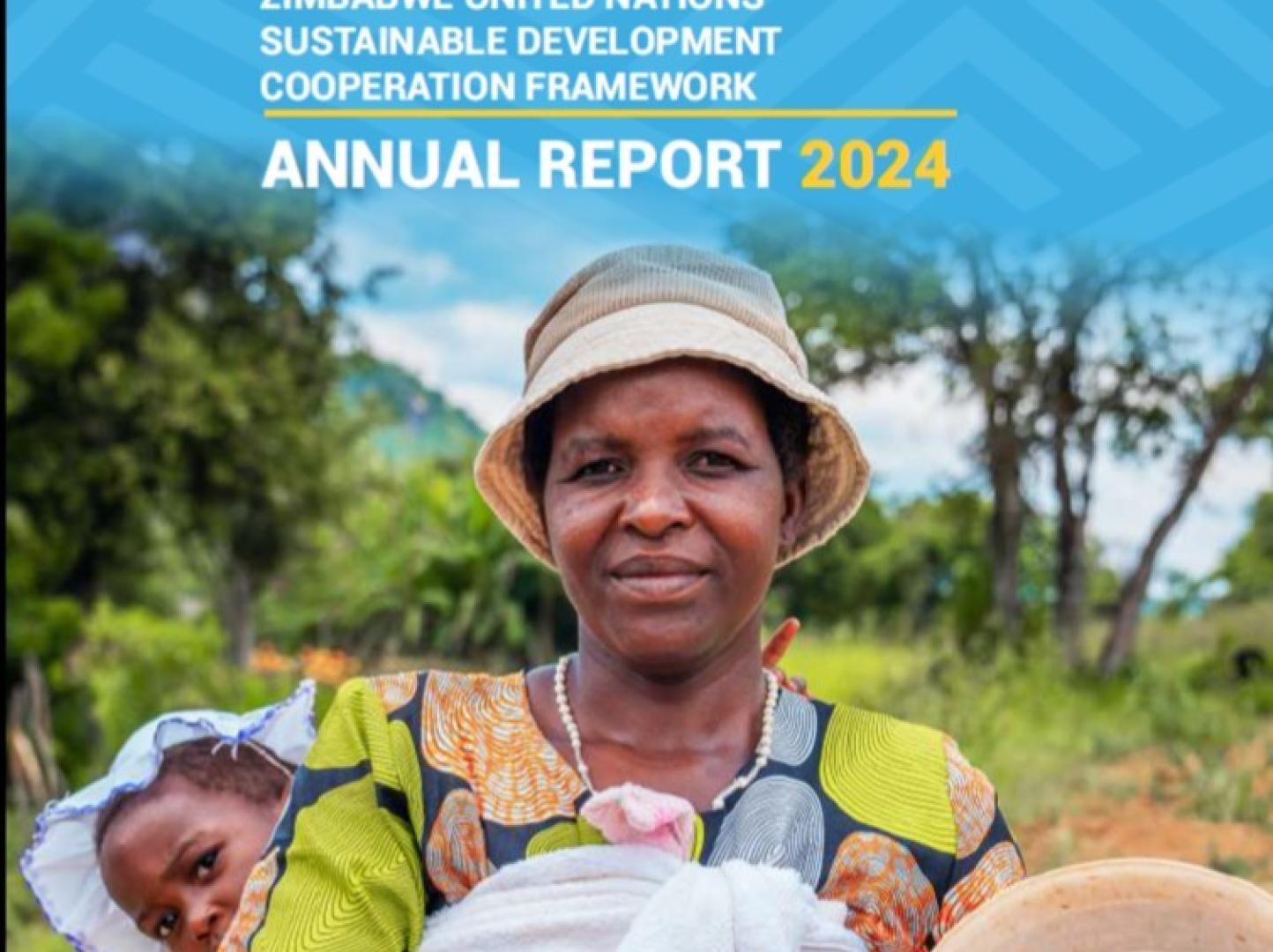
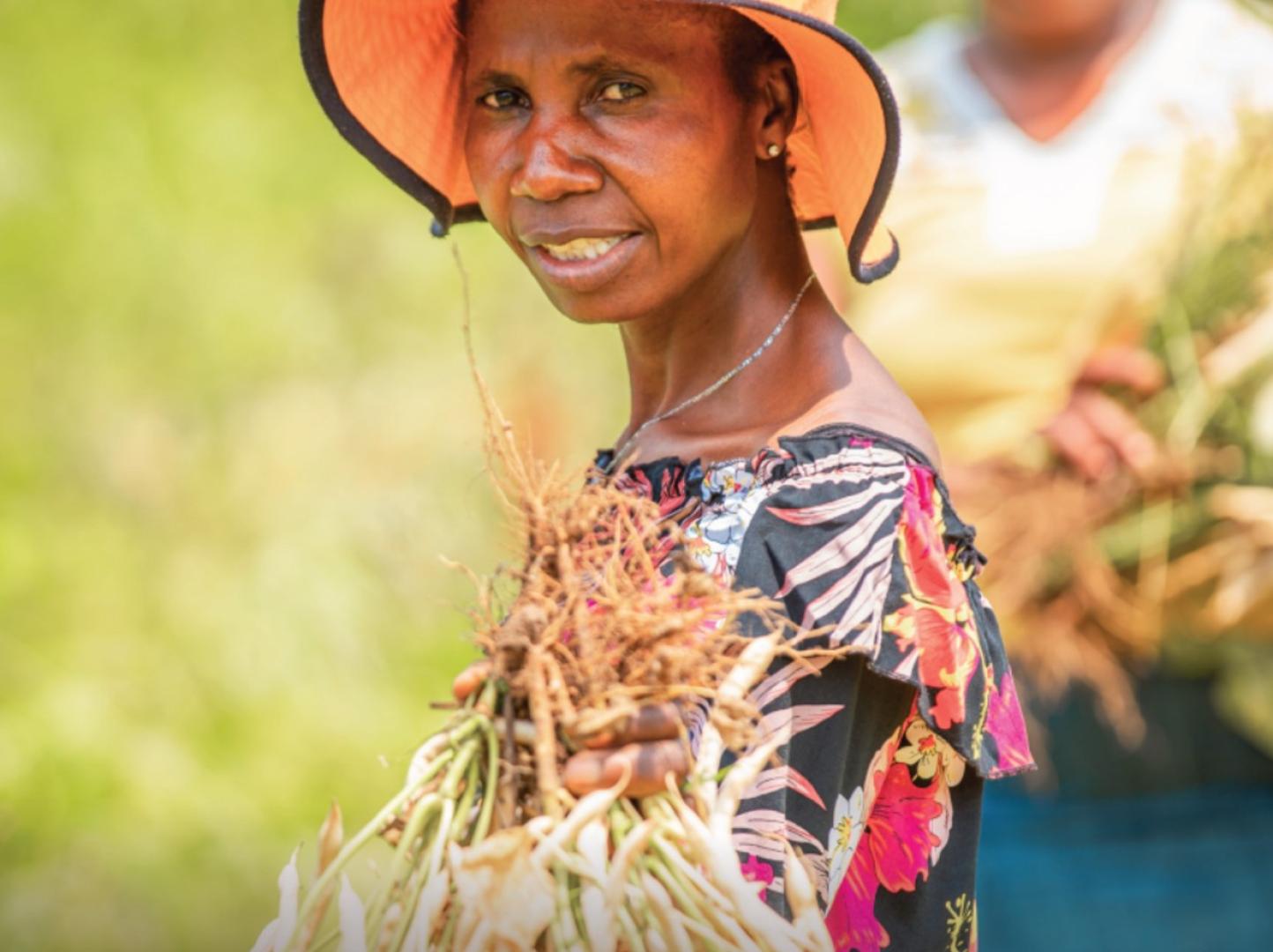
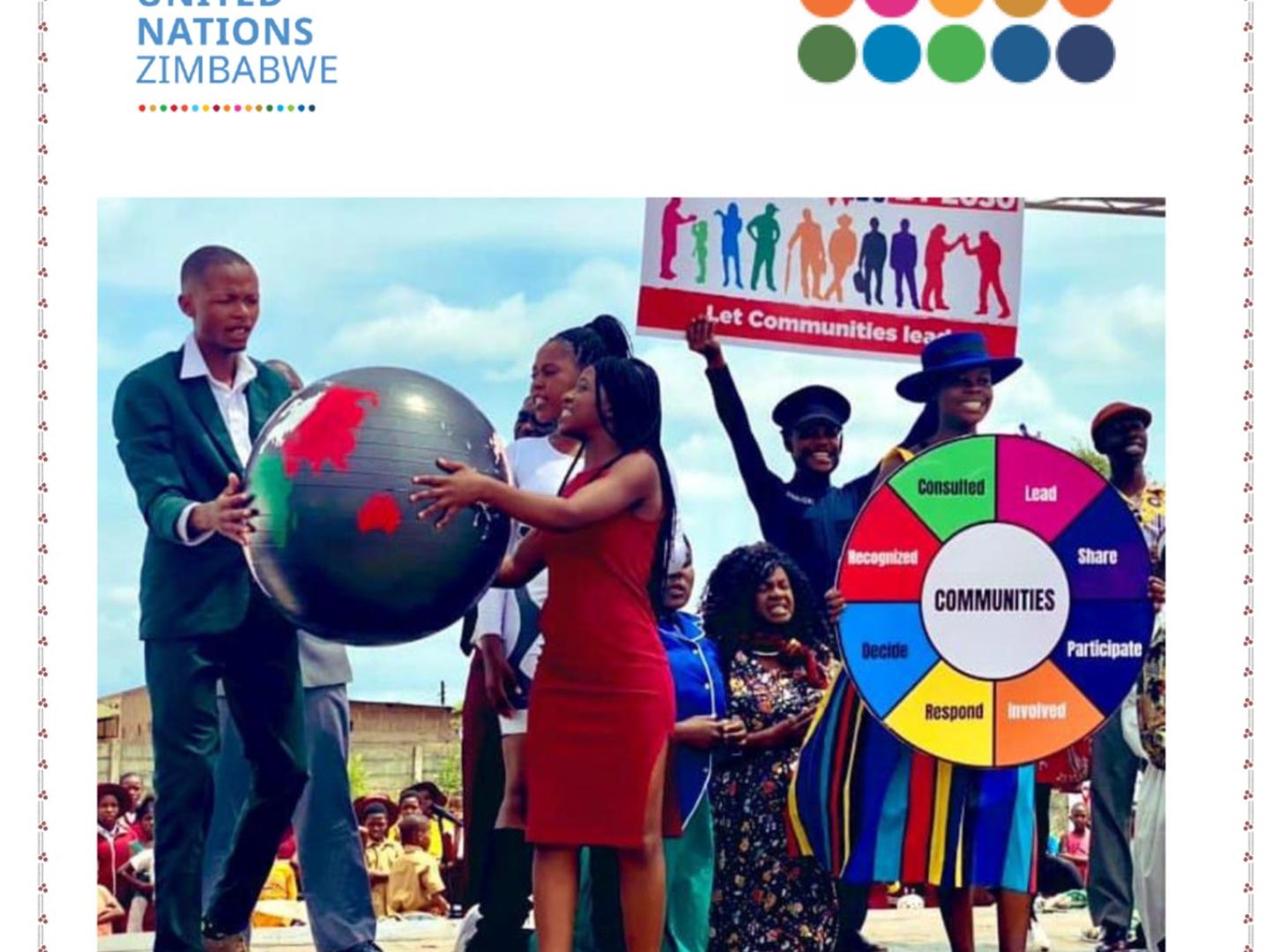

1 / 11